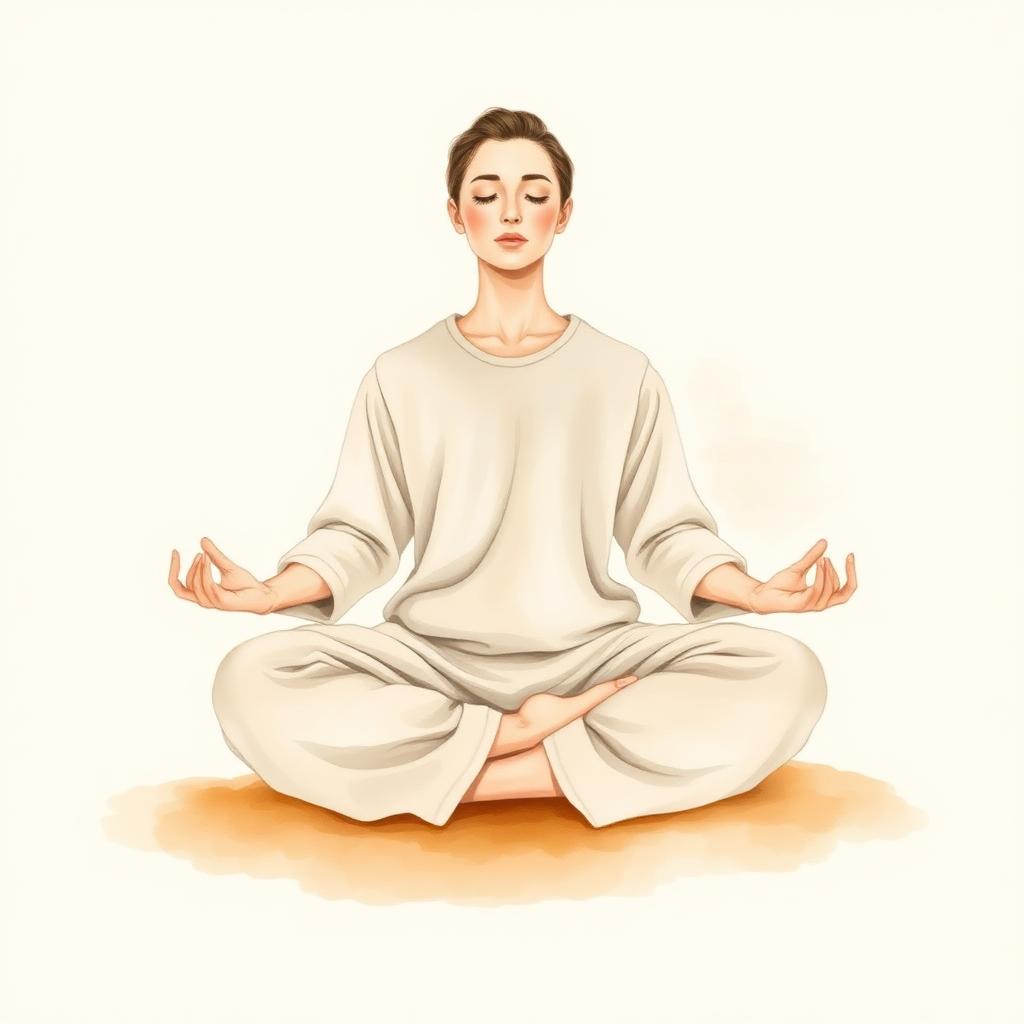
We do not always need to close our eyes. Sometimes the practice is to open them, and to keep them soft, and to remember that we are sitting on a piece of earth that has been here far longer than us and will be here long after.
This is meditation as relationship — not as escape from the world, but as more careful attention to it.
Sit somewhere alive if you can
Outside, if the weather and your body allow. Under a tree. On a porch. By an open window in a city, where the air still moves. If you cannot go outside, place a stone, a leaf, a small bowl of water in front of you. The land you cannot reach can still be invited in.
Listening, not labeling
Close your eyes for the first minute. Listen. Notice how many layers of sound there are. The near sound — your own breath, your clothing, the chair. The middle sound — a fan, a bird, a car. The far sound — wind in a tree, traffic on a road, a child laughing somewhere.
Do not name what you hear. Naming is the mind's way of taking a bite out of what it meets. Just listen. Let each sound be itself, fully, and pass.
The breath as gift
Remember that what you are inhaling was made by trees. And what you exhale will feed them. This is not poetic. This is anatomy. Breathing is the most ordinary covenant you have with the living world.
Sit, then, with a small gratitude for the leaf you have never met that gave you this particular breath. Then the next.
End with thanks
Before you stand up, give a quiet thanks. To the place, to the breath, to whatever you sat with — even your own restless mind. Gratitude is not a feeling we wait for; it is a practice that, over time, teaches the feeling.