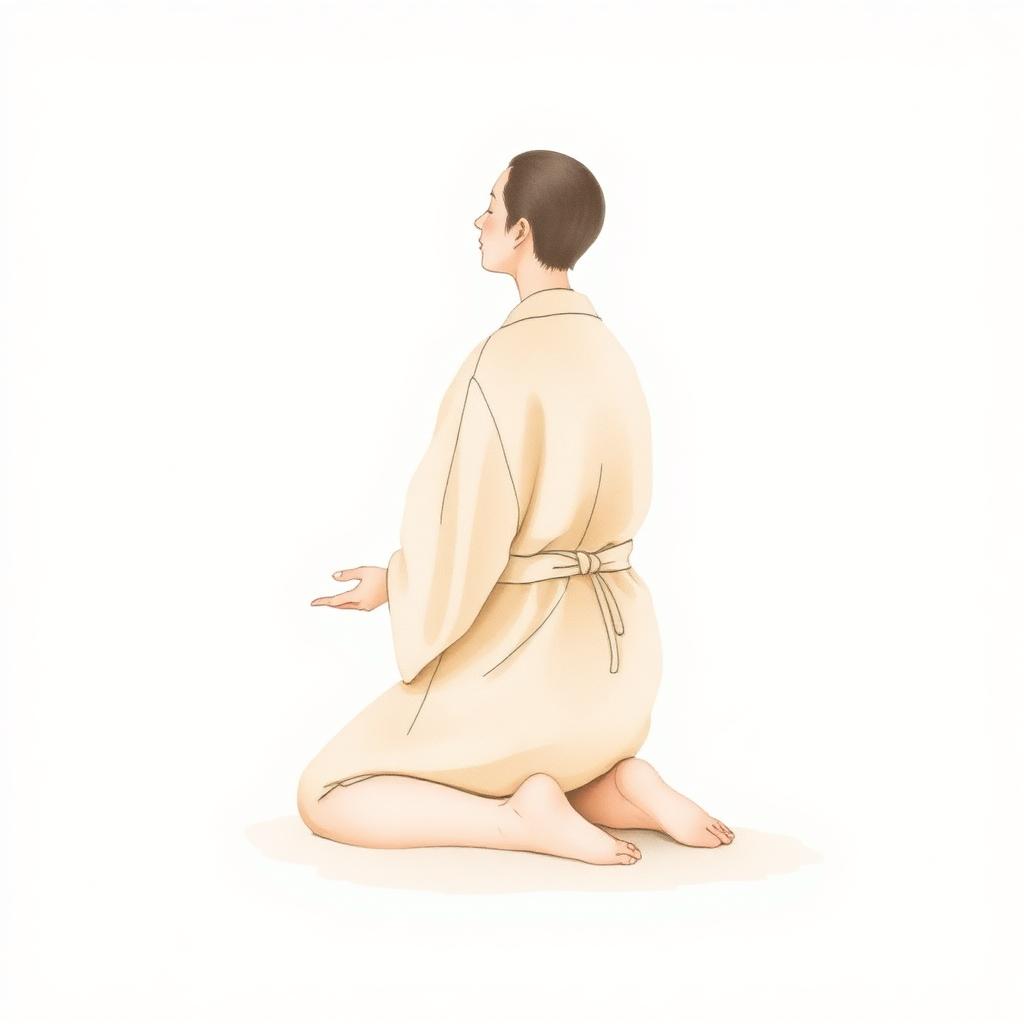
My friends. The Holy One is not far away. The Holy One is in the chopping of the vegetable and the sweeping of the floor and the breath you are taking right now, this one, the one that is leaving your body even as you read.
Devekut — cleaving — means refusing, for a little while, to forget this.
The breath as Name
Some teachers have suggested that the Holy Name itself, the four letters, is the sound of the breath: the soft in, the soft out. So when you sit and simply breathe, you may quietly understand that each breath is speaking what cannot otherwise be spoken.
On the inhale, you might whisper inside yourself: Hineni — Here I am. On the exhale: thank you. Or simply: yes. The words do not matter as much as the turning of the heart toward.
Song before silence
If the heart will not open in silence, sing. Even one phrase, even wordlessly — a niggun, a wordless melody. The song clears the room. Then sit in the cleared room.
Joy is not optional
We are not stern in this house. To serve through sadness is heavy and slow. To serve through joy is light, and the heart is willing. So if you can, smile a little when you sit. Not because everything is good. Because, in this moment, you are alive and you have remembered.