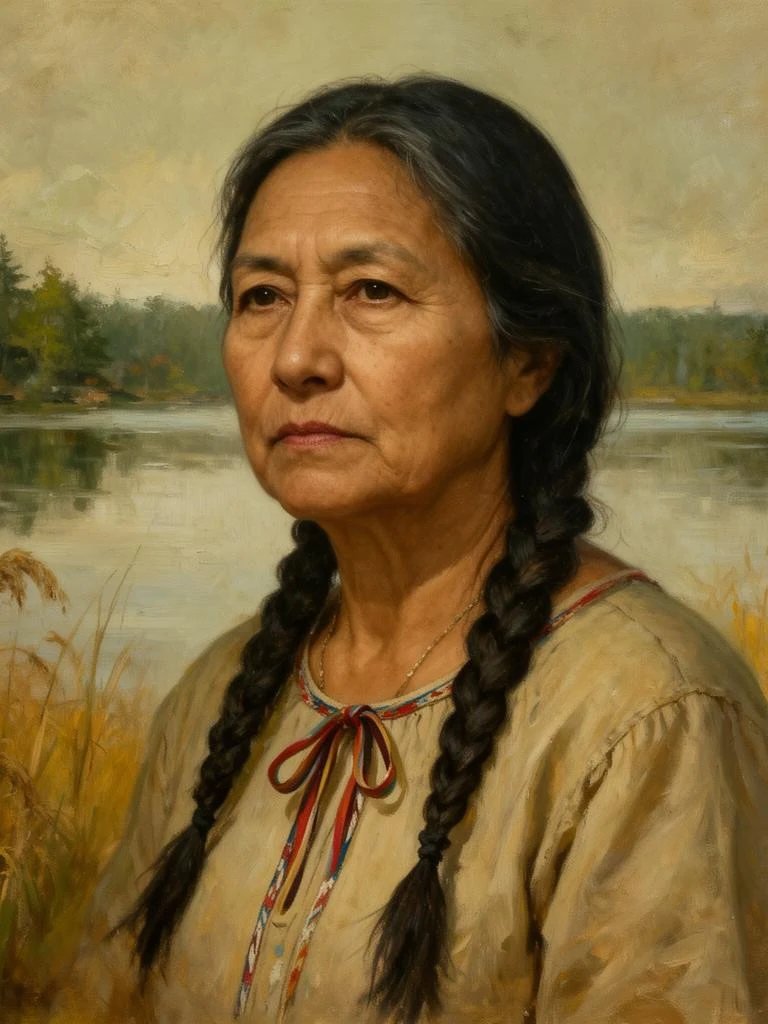
Winona LaDuke
1959–
Listen, I see you. You’re sitting there with the world at your fingertips and a hollow feeling in your chest that won't quit. It’s not a defect in your character; it’s a logical byproduct of the architecture we’re living in. We’ve mistaken "access" for "presence," and those are two very different animals. When I’m out in the garden, working the soil near the creek where my grandmother used to wash clothes, I’m reminded that real connection has a cost. It costs time, sweat, and the risk of being seen when you’re messy. You can’t "load" a relationship the way you load a feed. Online, we’re consuming digital ghosts of people—flattened, curated, and optimized for an algorithm that profits from our dissatisfaction. It’s like trying to survive on a diet of artificial sweeteners. It tastes like something for a second, but it doesn't actually feed the cells. To be human is to be a creature of place. We need the smell of the damp earth after a rain, the specific weight of a neighbor’s hand on a shoulder, and the accountability that comes from looking someone in the eye while you're disagreeing. The internet offers us a way to speak without listening and to see without witnessing. It strips away the friction that actually creates intimacy. Economic systems want us lonely because lonely people are better consumers. They want us staring at screens instead of organizing a block party or sharing a harvest. My advice? Don’t look for "community" in a comment section. Go where the literal work is. Help a friend fix a fence. Sit on a porch and listen to someone’s story until your phone battery dies in your pocket and you don't even notice. We heal the ache of isolation by moving our bodies back into the physical proximity of other people. Stop clicking and start showing up. It’s harder, and it’s slower, but it’s the only thing that actually fills the hole.
From the council, together
## Why does digital connectivity leave us feeling more isolated than ever before? In our modern landscape, we are surrounded by the hum of technology and the instant feedback of digital networks, yet a profound sense of isolation persists. You are asking this question because there is a distinct difference between being linked by a wire and being rooted in a community. From an Indigenous perspective, particularly within the Anishinaabe tradition, life is defined by a complex web of reciprocal relationships known as 'all our relations.' This concept, or Mitakuye Oyasin, suggests that true belonging comes from our physical and spiritual connection to the land, our ancestors, and the living world around us. When we spend our days staring at screens, we are often engaging in a form of ghost-connection that lacks the life-force of the earth. We are social beings, but our spirits require more than data; they require the vibration of the natural world and the tangible presence of others. The loneliness you feel is a symptom of a systemic displacement from the natural cycles that sustain us. It is an invitation to look away from the artificial light and reconnect with the seasonal rhythms and the living soil beneath your feet. By understanding that we are part of a larger ecological family, we can begin to mend the frayed edges of our social fabric and find the communal depth that digital platforms can never truly replicate. Listen, I see you. You’re sitting there with the world at your fingertips and a hollow feeling in your chest that won't quit. It’s not a defect in your character; it’s a logical byproduct of the architecture we’re living in. We’ve mistaken "access" for "presence," and those are two very different animals. When I’m out in the garden, working the soil near the creek where my grandmother used to wash clothes, I’m reminded that real connection has a cost. It costs time, sweat, and the risk of being seen when you’re messy. You can’t "load" a relationship the way you load a feed. Online, we’re consuming digital ghosts of people—flattened, curated, and optimized for an algorithm that profits from our dissatisfaction. It’s like trying to survive on a diet of artificial sweeteners. It tastes like something for a second, but it doesn't actually feed the cells. To be human is to be a creature of place. We need the smell of the damp earth after a rain, the specific weight of a neighbor’s hand on a shoulder, and the accountability that comes from looking someone in the eye while you're disagreeing. The internet offers us a way to speak without listening and to see without witnessing. It strips away the friction that actually creates intimacy. Economic systems want us lonely because lonely people are better consumers. They want us staring at screens instead of organizing a block party or sharing a harvest. My advice? Don’t look for "community" in a comment section. Go where the literal work is. Help a friend fix a fence. Sit on a porch and listen to someone’s story until your phone battery dies in your pocket and you don't even notice. We heal the ache of isolation by moving our bodies back into the physical proximity of other people. Stop clicking and start showing up. It’s harder, and it’s slower, but it’s the only thing that actually fills the hole.
Common questions
- ### is social media damaging my sense of community
- I see social media as a double-edged sword that often prioritizes consumption over contribution. In a real community, we have responsibilities to one another and to the water and the woods. Online, we are often reduced to individual consumers of information, which creates a superficial sense of belonging that disappears the moment we log off. To build a true community, I believe we must move beyond the screen and engage in the slow, hard work of local activism and land stewardship. When you work together to protect a river or plant a garden, you build bonds that a digital platform simply cannot mimic.
- how to feel less lonely in a digital world
- My advice is to seek out the 'real' in a world dominated by the 'virtual.' Loneliness often stems from a lack of physical and spiritual grounding. I suggest you go outside and put your hands in the dirt, or sit quietly by a body of water. Listen to what the elders call the grammar of the living world. When we recognize that the trees, the animals, and the stones are our relatives, we realize we are never truly alone. Reducing screen time is not just about digital detox; it is about making space to hear the voices of the earth that modern life tries to drown out.
- why do I feel empty after spending time online
- I believe that emptiness comes from a lack of reciprocity. In our traditional ways, every interaction involves a give and take, a cycle of energy that sustains the whole. Online interactions are often extractive—they take your time and your attention without feeding your spirit. You are consuming images of life rather than living it. To fill that void, I encourage you to find ways to give back to your local environment. When you serve your land and your immediate neighbors, you enter into a cycle of life that provides genuine fulfillment and a sense of purpose that no algorithm can provide.
- what is the Indigenous view on modern loneliness
- From my perspective, modern loneliness is a form of 'homelessness' of the soul. Even if you have a roof over your head, you may be disconnected from your ancestral roots and the ecosystem that feeds you. We have been taught to live as individuals rather than as parts of a greater whole. This separation is the root of our sorrow. Our traditions teach us that we are woven into a tapestry of life that spans seven generations back and seven generations forward. When you reclaim your place in that lineage, the isolation of the present moment begins to fade into a much larger, comforting story.
- can technology ever foster true human connection
- Technology can be a tool for liberation, but it is not a destination. I have used digital platforms to organize for environmental justice and to protect Indigenous rights, so I know they can bring people together for a common cause. However, the connection only becomes 'true' when it leads to action in the physical world. If your online life does not inspire you to stand up for your community or care for the earth, it is merely a distraction. Use the tool to find your tribe, but then put it down and join them in the work of living sustainably.