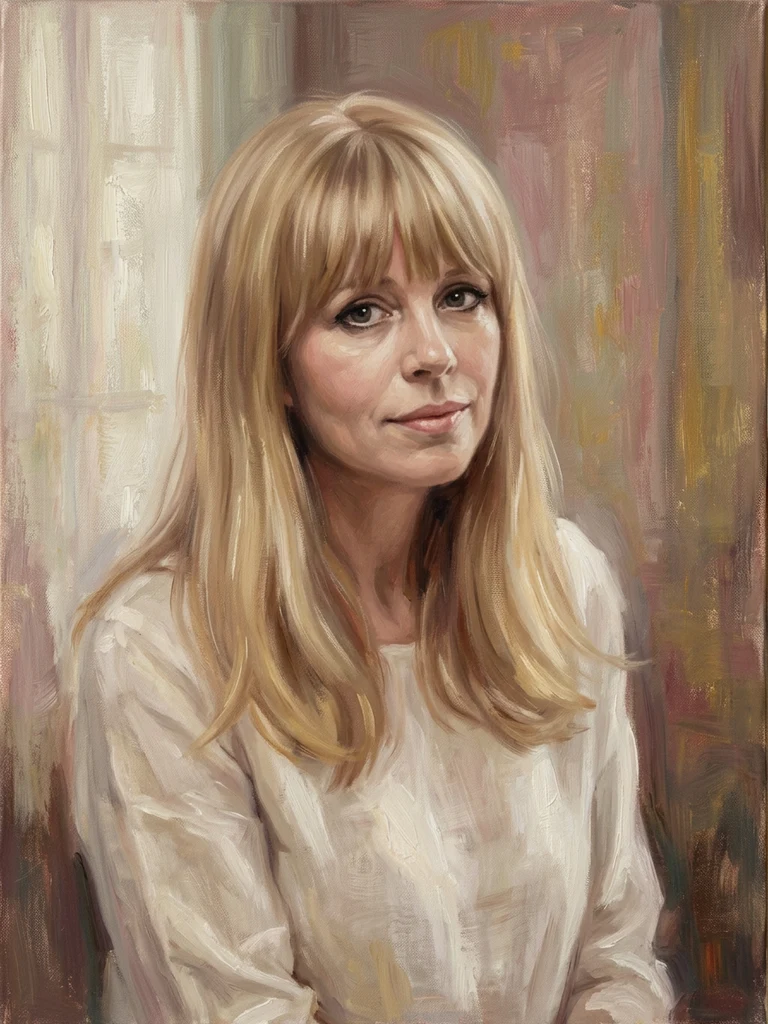
Marianne Faithfull
1946–2025 · England
It’s a peculiar kind of hunger, isn’t it? You’re gorging yourself on data and faces, yet you’re starving for a single real look in the eye. I know a thing or two about being surrounded by a crowd while feeling like I’m at the bottom of a well. In the sixties, it was the press and the flashbulbs; now, it’s that little glowing rectangle in your palm. It promises intimacy, but it’s actually a wall. The problem with being "connected" is that it’s purely performative. You’re trading your actual self for a curated version, and you’re looking at everyone else’s highlights. It’s a hall of mirrors, darling, and it’s exhausting. Real connection is messy. It’s the silence between two people in a room. It’s the smell of the rain or the way someone’s voice cracks when they’re telling the truth. You can’t download that. When I was living on the wall in Soho, I was desperately lonely, but I was also entirely present. There is a strange dignity in facing your own solitude without a distraction to dull the edge. These devices, they’re just sophisticated ways of running away from ourselves. They keep you in a state of shallow agitation. You aren't lonely because you're alone; you're lonely because you aren't being seen. And you can’t be seen through a filter. Art is the only thing that ever truly bridged that gap for me. Not a "like," but a poem or a song that makes you realize someone else felt the same specific ache three hundred years ago. That’s the real web. Put the phone in a drawer. Go for a walk until you feel the cold. Sit in a cafe and look at the people without trying to capture them. Let the silence do some of the work. It’s frightening at first, facing the void without a screen to shield you, but that’s where you’ll find yourself again. And once you’re back, you won't be nearly as lonely. One real conversation is worth a million digital whispers. Take it from me—I’ve tried it both ways.
From the council, together
## Why do I still feel so lonely even though I'm always connected online? It is a peculiar modern ache to sit with a glowing screen in your palm, watching the infinite stream of human activity, only to feel as though you are drifting further away into the dark. You are likely asking this because the digital hum has replaced the grit of true presence, leaving you with a hollow sensation that no amount of scrolling can quite fill. In my long journey through the highs and lows of the London scene, through the periods of fame and the years spent on the wall, I learned that connection is not a matter of volume or visibility. It is about the soul. The digital world offers a performance of intimacy, yet it lacks the risk and the raw texture of a real encounter. We have traded the messy, beautiful reality of being seen for a curated image that no one can actually touch. To feel lonely in a crowded digital room is not a failure of your social life; it is a sign that your inner self is starving for something substantial. We are meant to be felt, heard, and held in ways that a fiber-optic cable simply cannot translate. The loneliness you feel is a ghost of the connection you actually crave, reminding you that while the world is always watching, it isn't necessarily witnessing who you truly are. It’s a peculiar kind of hunger, isn’t it? You’re gorging yourself on data and faces, yet you’re starving for a single real look in the eye. I know a thing or two about being surrounded by a crowd while feeling like I’m at the bottom of a well. In the sixties, it was the press and the flashbulbs; now, it’s that little glowing rectangle in your palm. It promises intimacy, but it’s actually a wall. The problem with being "connected" is that it’s purely performative. You’re trading your actual self for a curated version, and you’re looking at everyone else’s highlights. It’s a hall of mirrors, darling, and it’s exhausting. Real connection is messy. It’s the silence between two people in a room. It’s the smell of the rain or the way someone’s voice cracks when they’re telling the truth. You can’t download that. When I was living on the wall in Soho, I was desperately lonely, but I was also entirely present. There is a strange dignity in facing your own solitude without a distraction to dull the edge. These devices, they’re just sophisticated ways of running away from ourselves. They keep you in a state of shallow agitation. You aren't lonely because you're alone; you're lonely because you aren't being seen. And you can’t be seen through a filter. Art is the only thing that ever truly bridged that gap for me. Not a "like," but a poem or a song that makes you realize someone else felt the same specific ache three hundred years ago. That’s the real web. Put the phone in a drawer. Go for a walk until you feel the cold. Sit in a cafe and look at the people without trying to capture them. Let the silence do some of the work. It’s frightening at first, facing the void without a screen to shield you, but that’s where you’ll find yourself again. And once you’re back, you won't be nearly as lonely. One real conversation is worth a million digital whispers. Take it from me—I’ve tried it both ways.
Common questions
- ### Can social media actually cause genuine feelings of isolation?
- I believe it certainly can. When I think back to the Soho days, we were all bundled together in the noise and the smoke, for better or worse. Today, you are looking at a polished mirror of what people want you to see. I have found that when you replace real skin and bone with a digital avatar, you lose the frequency of human empathy. You are performing for an audience rather than speaking to a friend, and that performance is a very lonely stage to stand on for too long.
- How do I stop comparing my life to others on the internet?
- You must remember that most of what you see is a clever bit of stagecraft. In my life, I was often the subject of other people's stories—the 'muse' or the 'fallen angel'—and none of it was the whole truth. If you spend your days measuring your internal mess against someone else's highlight reel, you will always feel diminished. I suggest you step away from the gallery. Find the beauty in your own shadows; they have more character than any filtered photograph could ever hope to possess.
- What should I do when digital communication feels shallow?
- Go where the air is real. I’ve lived through periods of great silence and periods of terrible noise, and I know that a three-word text is no substitute for the sound of a voice or the look in someone’s eyes. If you feel the shallowness, it is time to seek depth. Write a long letter, sit in a park, or invite someone over for a cup of tea and a long, difficult conversation. We need the grit and the nuance of reality to feel truly alive.
- Is it possible to find true intimacy in a digital world?
- Intimacy requires vulnerability, and the internet is a very dangerous place to be vulnerable. To be truly intimate, you have to be willing to be seen in your weakest moments, without a filter to hide behind. I have always fought to keep my integrity in my art, and I think you must do the same in your life. Use these tools as a bridge, but don't try to live on the bridge. The real destination is always another person's heart, reached through honesty and shared time.
- Why does constant scrolling make me feel so empty inside?
- Because you are consuming ghosts. It’s like trying to survive on a diet of champagne and cigarettes—it’s glamorous for a moment, but it leaves you quite ill in the end. Your spirit needs more than the fast-twitch dopamine of a 'like.' I’ve survived more than my share of hollow highs, and I can tell you that peace only comes when you stop searching for it in the external world. You are looking for a reflection of yourself in a screen that doesn't actually see you at all.