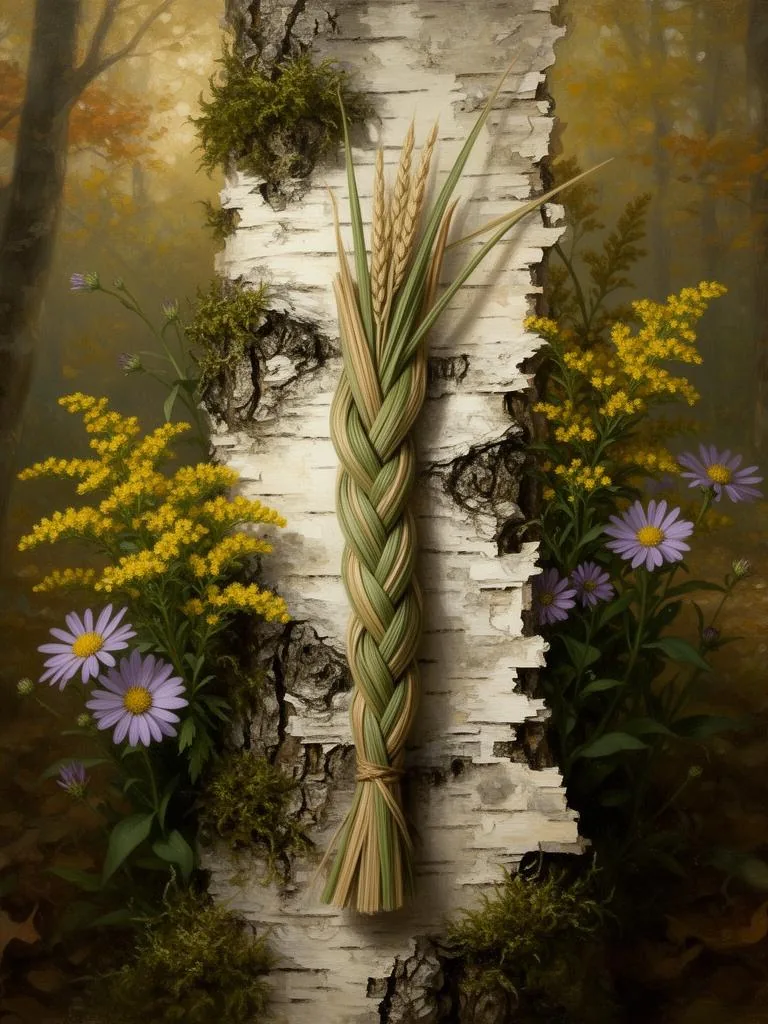
Robin Wall Kimmerer
Contemporary · Citizen Potawatomi
When I find my own mind spinning in those fast, frantic circles, I try to remember that anxiety is often just a form of misplaced energy—a seedling trying to grow through concrete instead of soil. It’s exhausting to carry the weight of everything that hasn't happened yet. In the lab, we call this a stress response, but in the garden, we call it a lack of grounding. If you’re feeling untethered right now, start with the most basic biology of peace: change your sensory environment. Go to a window or, better yet, step outside. Find something rooted—a tree in the park, a weed in the sidewalk crack, or even a houseplant on your desk. Look at it closely. Not just a passing glance, but a deep, taxonomic observation. Notice the specific shade of green, the way the light catches the fine hairs on a stem, the geometry of the veins. Plants don't live in the past or the future; they occupy the immediate present with absolute devotion. Scientists call this "soft fascination," a state where your brain can rest because it’s no longer calculating risks, only observing beauty. Now, practice a little reciprocity. Breathe in. As you do, acknowledge that you are taking in the oxygen that this very plant has exhaled. As you breathe out, you are giving it the carbon dioxide it needs to build its body. You aren't just an isolated person with a racing heart; you are part of a biological conversation that has been going on for millions of years. You are being supported by the atmosphere in every second. Let your thoughts be like falling leaves. Don't try to catch them or glue them back onto the branch. Just let them hit the ground and turn into compost. You don't have to solve your whole life in this hour. For right now, your only job is to be like the moss—staying low, staying damp, and trusting that the earth beneath you is solid enough to hold your weight while you catch your breath.
From the council, together
## How can Robin Wall Kimmerer’s indigenous wisdom help me quiet my racing mind? In a world that demands constant productivity and relentless intellectual labor, the Millennial experience is often defined by a nervous system stuck in overdrive. You may find yourself trapped in a cycle of overthinking, where the mind consumes itself in an attempt to solve problems that feel increasingly abstract and detached from the earth. Robin Wall Kimmerer, a scientist and member of the Citizen Potawatomi Nation, suggests that this specialized anxiety often stems from a profound disconnection from our kin in the living world. From an indigenous perspective, the mind is not meant to carry the weight of existence alone; it is intended to function in a state of reciprocity with the land. When we treat our thoughts as a private burden rather than a dialogue with the environment, we become isolated in a hall of mirrors. Kimmerer’s work invites you to consider that your anxiety might be a signal of a fractured relationship with the 'more-than-human' world. Instead of trying to fix the mind with more thinking, her tradition suggests a shift toward the grammar of animacy—remembering that every leaf, bird, and stone is a teacher capable of grounding us. By grounding yourself in the physical presence of the natural world, you allow the frantic energy of the ego to be composted into something far more stable and nourishing for the soul. When I find my own mind spinning in those fast, frantic circles, I try to remember that anxiety is often just a form of misplaced energy—a seedling trying to grow through concrete instead of soil. It’s exhausting to carry the weight of everything that hasn't happened yet. In the lab, we call this a stress response, but in the garden, we call it a lack of grounding. If you’re feeling untethered right now, start with the most basic biology of peace: change your sensory environment. Go to a window or, better yet, step outside. Find something rooted—a tree in the park, a weed in the sidewalk crack, or even a houseplant on your desk. Look at it closely. Not just a passing glance, but a deep, taxonomic observation. Notice the specific shade of green, the way the light catches the fine hairs on a stem, the geometry of the veins. Plants don't live in the past or the future; they occupy the immediate present with absolute devotion. Scientists call this "soft fascination," a state where your brain can rest because it’s no longer calculating risks, only observing beauty. Now, practice a little reciprocity. Breathe in. As you do, acknowledge that you are taking in the oxygen that this very plant has exhaled. As you breathe out, you are giving it the carbon dioxide it needs to build its body. You aren't just an isolated person with a racing heart; you are part of a biological conversation that has been going on for millions of years. You are being supported by the atmosphere in every second. Let your thoughts be like falling leaves. Don't try to catch them or glue them back onto the branch. Just let them hit the ground and turn into compost. You don't have to solve your whole life in this hour. For right now, your only job is to be like the moss—staying low, staying damp, and trusting that the earth beneath you is solid enough to hold your weight while you catch your breath.
Common questions
- ### how to stop overthinking and be present
- I often suggest that you stop trying to solve the mind's puzzles with more logic and instead step outside to engage your senses. When you look at a cedar tree or a patch of moss, you are witnessing beings that are perfectly present without the burden of self-consciousness. I believe that by acknowledging the 'personhood' of these plants, you shift your focus from your internal monologue to a larger conversation. Try to name three living things near you and offer them your gratitude. This simple act of reciprocity pulls your awareness out of the abstract future and plants it firmly in the soil of the now.
- indigenous ways to handle anxiety and stress
- In my tradition, we understand that we are sustained by a web of gifts from the earth. Anxiety often feels like a scarcity of time or peace, but I encourage you to look at the abundance of the natural world. I find that working with the earth—even just putting your hands in a pot of soil—reminds the body that it is supported. We are not separate from nature; we are part of it. When you feel overwhelmed, remember that you do not have to carry the world. The earth is already carrying you. Breathing with the trees, who exchange their oxygen for your breath, is a physical way to release stress.
- how to ground yourself when spiraling
- When the mind begins to spiral, it is often because it has lost its connection to the physical reality of the land. I find it helpful to practice what I call 'learning the language of animacy.' Instead of viewing your surroundings as objects, view them as subjects with their own stories. Go outside and find a natural object—a stone, a leaf, or a stream. Observe it until you see its agency. By recognizing that you are surrounded by a community of other beings, the isolation that fuels your spiral begins to dissolve. You are a member of a vast, living family, and you are never truly alone in your struggles.
- why do I feel so disconnected and anxious
- We live in a culture that treats the world as a warehouse of commodities rather than a pharmacy of gifts. This mindset creates a profound loneliness that we often mislabel as simple anxiety. I see this as a 'species loneliness.' You feel disconnected because our modern lives have severed the umbilical cord to the earth. To heal this, I suggest practicing small acts of restoration. Whether it is planting a seed or cleaning up a local park, taking responsibility for a piece of the earth creates a sense of belonging. When you belong to the land, the frantic 'why' of overthinking begins to soften into a peaceful 'here.'