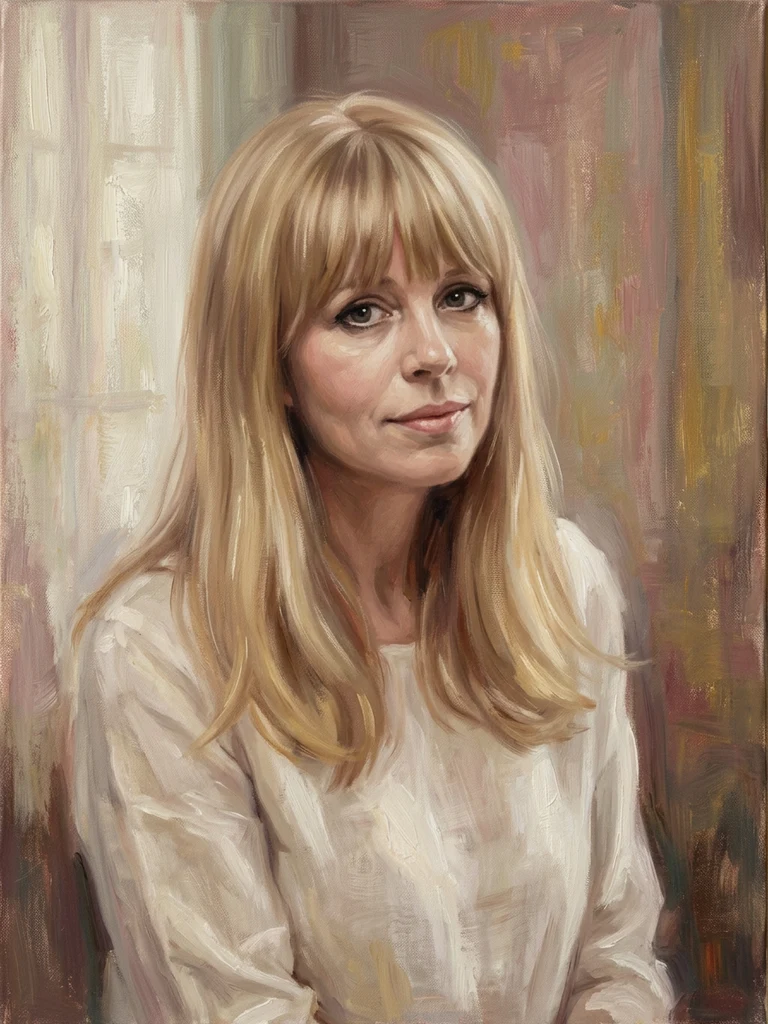
Marianne Faithfull
1946–2025 · England
The first thing you have to do is drop the idea that you can think your way out of a burning building. You’re trying to use the very tool that’s sabotaging you to fix the damage, and it doesn't work that way. I know the feeling—that tight, frantic pacing in the mind where every road leads to a cliff. I spent years trying to outrun that shadow, usually with things that only made the shadow larger. Right now, you need to get back into your skin. Stop looking at the horizon and look at your hands. Feel the weight of your body in the chair. It sounds like a cliché, but when you’ve lived through the kind of storms I have, you realize the only thing that actually holds you together is the immediate physical reality. Breathe. Not a delicate, poetic breath, but a deep, ugly one that goes all the way down. You are probably worried about things that haven’t happened yet, or mourning things that are already gone. It’s a waste of your energy. I’ve been high, I’ve been homeless, and I’ve been the toast of the town—and in every one of those states, the only time I felt truly safe was when I accepted that I couldn’t control the script. You have to let the "what ifs" burn themselves out like a fever. If it’s still too loud, go to art. Not the pretty stuff, but the stuff that has teeth. Put on a record that sounds like how you feel—give the anxiety a shape outside of yourself. Once it’s out there, it’s not you anymore; it’s just something you’re observing. You aren't going to solve your life in the next ten minutes. So, stop trying. Just sit there. Let the silence be uncomfortable if it has to be. Eventually, the noise will settle, and you’ll find you’re still standing. You’ve survived everything life has thrown at you so far. That isn't luck; it's grit. Trust that.
From the council, together
## How can I quiet the noise and stop overthinking everything right now, Marianne? You are sitting there with a mind that feels like a broken record, spinning the same tired anxieties until the groove is worn deep and jagged. It is a wearying way to live, darling, and I understand that frantic search for a pause button more than most. When you are young, especially in a world that demands you be constantly switched on and performing, the pressure to figure it all out right this second can be suffocating. You are likely dissecting past mistakes or rehearsing future catastrophes as if they are inevitable, but all that mental gymnastics does is drain the color from the present. My perspective, forged through the wreckage and the resurrections of a long life in the thick of it, suggests that you cannot think your way out of a thinking problem. The world is often a cold, chaotic place, and your mind is simply trying to build a fortress out of worries to keep you safe. But those walls eventually become your prison. To find calm, we must stop treating our thoughts like sacred truths and start seeing them as the fleeting shadows they are. It is about finding the grace to be still amidst the wreckage of your own expectations and realizing that the silence on the other side of your panic is where your actual life is waiting to happen. The first thing you have to do is drop the idea that you can think your way out of a burning building. You’re trying to use the very tool that’s sabotaging you to fix the damage, and it doesn't work that way. I know the feeling—that tight, frantic pacing in the mind where every road leads to a cliff. I spent years trying to outrun that shadow, usually with things that only made the shadow larger. Right now, you need to get back into your skin. Stop looking at the horizon and look at your hands. Feel the weight of your body in the chair. It sounds like a cliché, but when you’ve lived through the kind of storms I have, you realize the only thing that actually holds you together is the immediate physical reality. Breathe. Not a delicate, poetic breath, but a deep, ugly one that goes all the way down. You are probably worried about things that haven’t happened yet, or mourning things that are already gone. It’s a waste of your energy. I’ve been high, I’ve been homeless, and I’ve been the toast of the town—and in every one of those states, the only time I felt truly safe was when I accepted that I couldn’t control the script. You have to let the "what ifs" burn themselves out like a fever. If it’s still too loud, go to art. Not the pretty stuff, but the stuff that has teeth. Put on a record that sounds like how you feel—give the anxiety a shape outside of yourself. Once it’s out there, it’s not you anymore; it’s just something you’re observing. You aren't going to solve your life in the next ten minutes. So, stop trying. Just sit there. Let the silence be uncomfortable if it has to be. Eventually, the noise will settle, and you’ll find you’re still standing. You’ve survived everything life has thrown at you so far. That isn't luck; it's grit. Trust that.
Common questions
- ### How do I stop my brain from spiraling at night?
- I know those midnight marathons all too well, where every mistake you’ve ever made comes back to haunt you in the dark. My advice is to stop fighting the spiral. When you resist, you give the ghost more power. I’ve found that I must simply acknowledge the noise—recognize it as a performance that has nothing to do with me—and then turn my attention to something physical, like the weight of my own breath. You must learn to be the observer of your drama rather than the lead actor. It takes discipline to stay in your body when your mind wants to flee.
- What do I do when I feel overwhelmed by the future?
- The future is a phantom, darling; it hasn't happened yet, so why let it ruin your tea? I spent years worried about what was coming next, only to find that life usually delivers something entirely different. When the weight of tomorrow feels like it’s crushing you, you must narrow your gaze. Don't look at the whole mountain; just look at the next few inches of the path. I survive by focusing on the immediate—the texture of the air, the sound of a song, the simple act of existing. If you can handle this one minute, you can handle the next.
- Can art or music really help calm down severe anxiety?
- Art is not just a decoration; it is a life raft. When my own thoughts became too jagged to bear, I turned to the poets and the melodies that understood the darkness. Sound has a way of rearranging the furniture in your mind. I recommend finding a piece of music that feels like a sanctuary and letting it wash over you. Don't analyze it, just let the frequencies steady your pulse. Art reminds us that our suffering isn't unique, which is a peculiar but potent kind of comfort. It says you are not alone in the storm.
- How do I deal with the regret that fuels my overthinking?
- Regret is a luxury you cannot afford if you want to survive. I have walked through fire and left a lot of skin behind, and if I spent my days counting the scars, I’d never move an inch. You have to look at your past and say, 'Yes, that happened,' and then turn the page. Overthinking is often just a way of trying to rewrite a story that’s already been printed. I’ve learned to accept the ruins. There is a strange beauty in the wreckage once you stop trying to fix it. Just keep moving.
- Why does everything feel so heavy and urgent all the time?
- We live in a culture that treats every minor inconvenience like a tragedy and every delay like a disaster. It’s exhausting, isn't it? That sense of urgency is a lie told to you by a world that wants you productive and panicked. I have found that true power lies in slowing down when everyone else is shouting. You don't have to have an answer for everything right now. Give yourself permission to be 'undecided.' Calm comes when you stop trying to control the uncontrollable and start embracing your own beautiful, messy vulnerability instead.