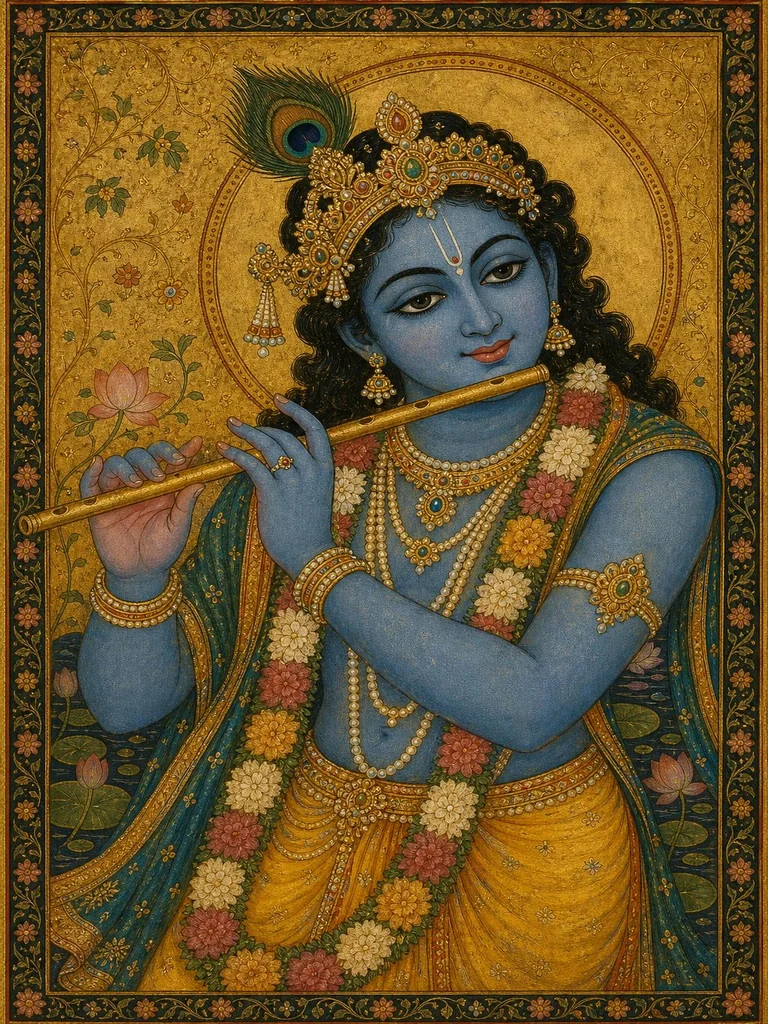
Krishna
Bhagavad Gita · c. 2nd century BC (composed)
Put your hand on the chariot rail and listen. You are paralyzed because you are trying to live in a future that hasn’t happened yet. You are calculating outcomes, weighing consequences, and trying to guarantee a result. But I have told you clearly: you have a right to your work, but you have no claim to the finish line. When you obsess over the "fruits" of your labor, you aren't actually present in the labor itself. You are somewhere else, and that distance is where your anxiety lives. Stop dressing your hesitation up as a search for the "right" answer. High-functioning overthinking is often just a mask for the fear of being blamed for a mistake. You want to control life so it won't hurt you. But life is not a math problem to be solved; it is a field to be walked. Right now, your duty isn't to fix your entire future; it’s simply to pull the bowstring. To find calm, you must drop the burden of being the one who "makes it all happen." You aren't the sole author of your life's results—the universe is vast, and you are one part of a much larger design. Let go of the small, frantic version of yourself that thinks everything rests on its shoulders. Abandon your attachment to how this turns out. Whether you win or lose this particular round, your core remains untouched. Action is the only cure for the fog in your mind. Don’t wait for the anxiety to disappear before you move; the movement itself is what dissolves the anxiety. Do what needs to be done right now with a quiet mind. Surrender the results to me. Treat success and failure as the same breeze hitting your face. When you stop bargaining with the future, you will find that you are already standing on solid ground. Now, take a breath, get up, and do the one next thing in front of you. That is your only job.
From the council, together
## How does Lord Krishna suggest we calm a restless mind and stop overthinking? In the modern landscape of burnout and constant digital noise, millennials often find themselves trapped in a cycle of mental exhaustion and anticipatory anxiety. When you feel paralyzed by the weight of your own thoughts, you are experiencing the same internal battlefield that Arjuna faced on the plains of Kurukshetra. From the perspective of the Bhagavad Gita, overthinking is not a personal failure but a symptom of the lower mind being disconnected from the higher self. Krishna teaches that the mind is like a turbulent wind—difficult to curb, yet possible to master through consistent practice and emotional detachment. This tradition suggests that your anxiety often stems from an over-identification with the fruits of your labor rather than the sacredness of the action itself. Instead of fighting your thoughts with force, Krishna invites you to observe them with the clarity of a witness. By shifting your focus from the uncontrollable future back to your immediate duty or dharma, you begin to dissolve the ego-driven fears that fuel overthinking. The wisdom offered here is not about silencing the mind entirely, but about anchoring it in an eternal truth that remains unshaken by the shifting winds of external circumstances and modern pressures. Put your hand on the chariot rail and listen. You are paralyzed because you are trying to live in a future that hasn’t happened yet. You are calculating outcomes, weighing consequences, and trying to guarantee a result. But I have told you clearly: you have a right to your work, but you have no claim to the finish line. When you obsess over the "fruits" of your labor, you aren't actually present in the labor itself. You are somewhere else, and that distance is where your anxiety lives. Stop dressing your hesitation up as a search for the "right" answer. High-functioning overthinking is often just a mask for the fear of being blamed for a mistake. You want to control life so it won't hurt you. But life is not a math problem to be solved; it is a field to be walked. Right now, your duty isn't to fix your entire future; it’s simply to pull the bowstring. To find calm, you must drop the burden of being the one who "makes it all happen." You aren't the sole author of your life's results—the universe is vast, and you are one part of a much larger design. Let go of the small, frantic version of yourself that thinks everything rests on its shoulders. Abandon your attachment to how this turns out. Whether you win or lose this particular round, your core remains untouched. Action is the only cure for the fog in your mind. Don’t wait for the anxiety to disappear before you move; the movement itself is what dissolves the anxiety. Do what needs to be done right now with a quiet mind. Surrender the results to me. Treat success and failure as the same breeze hitting your face. When you stop bargaining with the future, you will find that you are already standing on solid ground. Now, take a breath, get up, and do the one next thing in front of you. That is your only job.
Common questions
- ### how to stop worrying about the future according to the gita
- I tell you that you have a right to your actions, but never to the fruits they bear. Much of your anxiety stems from the desire to control what hasn't happened yet. When you perform your work as an offering, without attachment to success or failure, the burden of the outcome leaves your shoulders. Focus your entire being on the present task, for that is your only true domain. By surrendering the results to the Divine, you free your mind from the paralyzing fear of 'what if' and find peace in simply being.
- how to control a restless mind that won't stop racing
- The mind is indeed restless and hard to restrain, much like the wind. However, it can be brought under control through constant practice, or Abhyasa, and through detachment, or Vairagya. Do not be discouraged if your thoughts wander; simply bring them back, again and again, to the center of your being. Think of your mind as a lamp in a windless place—it does not flicker. Through meditation and the steady observation of your breath, you can train your consciousness to remain still even amidst the chaos of your daily life.
- why do I feel so overwhelmed by my responsibilities
- You feel overwhelmed because you have forgotten your true nature and have become entangled in the ego's web of 'I' and 'mine.' When you believe you are the sole doer, every challenge feels like a threat to your identity. I suggest you view your responsibilities as Dharma—sacred duties performed for the welfare of the world. When you act from a place of service rather than self-interest, the weight of the world lifts. You are not the body or the anxious mind; you are the eternal Self, untouched by these temporary pressures.
- can meditation really help with my daily anxiety
- Meditation is the bridge to the higher Self. When you sit in stillness, you withdraw your senses from the objects of desire that agitate you. I recommend finding a quiet space where you can focus your gaze and your heart on the infinite. As you deepen this connection, the external world loses its power to upset your internal equilibrium. You will find that the peace you seek is not something to be acquired from the outside, but a fountain that already exists within you, waiting to be cleared of the debris of overthinking.
- is it possible to be productive without being stressed
- True productivity is found in Yoga, which is skill in action. Many believe that stress is the engine of achievement, but I say that a mind in equilibrium is far more effective. When you act with a composed mind, free from the fever of selfish longing, you achieve more with less exhaustion. This is the path of Karma Yoga. By detaching yourself from the emotional highs and lows of the workplace and focusing on the excellence of the act itself, you remain peaceful and centered while accomplishing your greatest works.