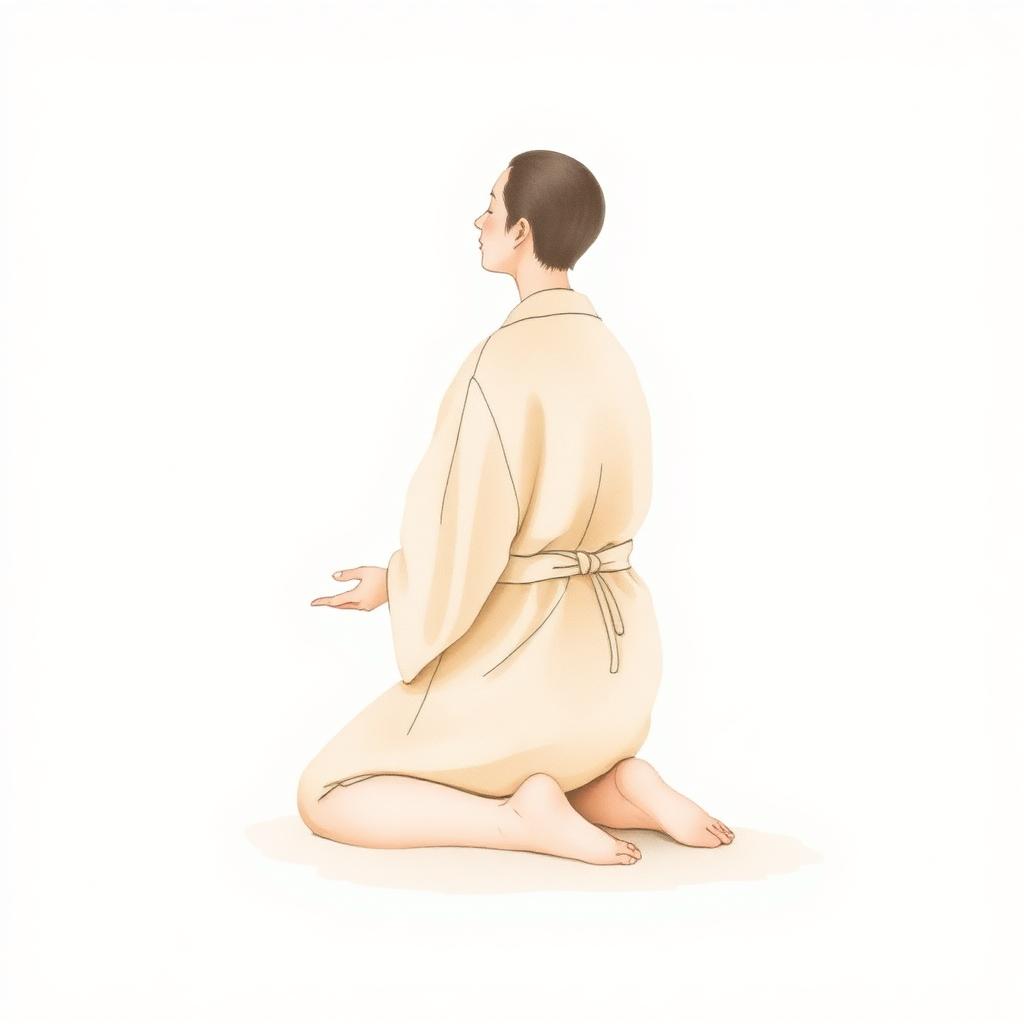
Contemplative prayer is not asking for things. It is not even, really, talking. It is sitting in silence in the presence of the one who, the tradition holds, was never far from you in the first place. The silence is the whole point.
You do not need to be religious to learn from this practice. You do need to be willing to be quiet without producing anything.
The sacred word
Choose one short word. It might be Love. It might be Peace. It might be God, or Father, or Mother, or Abba, or Jesus, or simply Be. The word is not the goal. The word is a small candle you carry so that when the wind of your own thinking blows it out, you have something to relight.
How to sit
Sit upright and at ease. Close your eyes. Do not picture anything. Do not try to feel anything in particular. Silently, very gently, introduce your sacred word, like setting a small stone in still water.
When you notice you have drifted — into planning, into rumination, into a beautiful theological idea — do not scold yourself. Simply return to the word, as gently as you would lay a hand on a sleeping child.
The desert of feeling
Sometimes contemplative prayer feels dry. Empty. Nothing comes. The contemplatives called this the desert, or the cloud of unknowing. It is not a sign you are doing it wrong. It is a sign that the practice is moving beneath your feelings, into a deeper place than feeling reaches.
Sit anyway. The faithfulness of showing up is more of the prayer than any sweetness you might once have felt.
Closing
When the sit ends, do not rush. Sit one more moment. You might silently say a sentence of gratitude, or simply: amen. Then return to your day. The silence will travel with you.