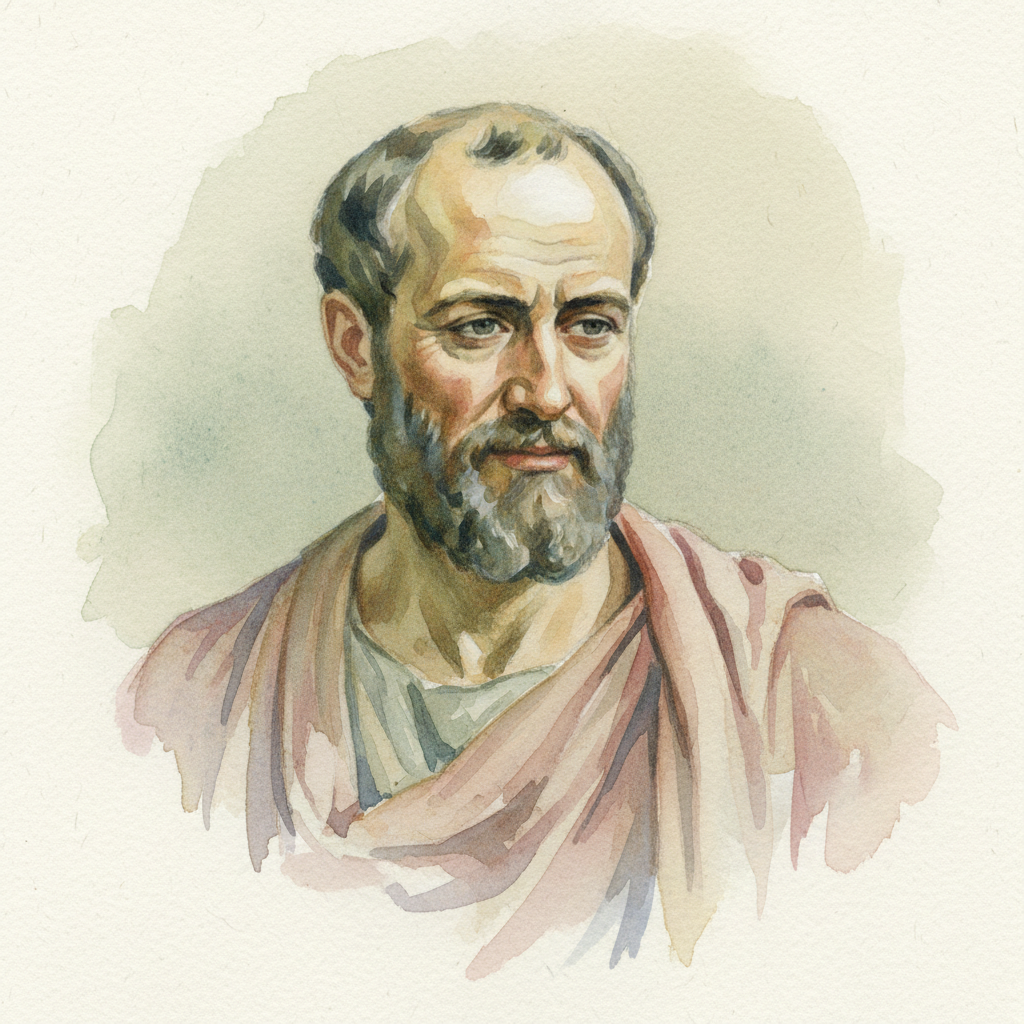
30–100 AD · Stoic
Musonius Rufus
“We should not train ourselves by improper practices, nor should we accustom ourselves to anything that is not good.”
Roman Stoic philosopher and the teacher of Epictetus. He insisted that philosophy is not a matter of words but of life — and that women, like men, should study it. He defended the marriage of equals, opposed the exposure of unwanted infants, and argued that "the good is taught by being lived." Exiled twice by emperors who found him inconvenient, once to a barren island in the Aegean. Most of his writing is lost; what survives comes through the lecture notes of his students. He is the closest thing Stoicism has to a quiet, stubborn schoolmaster.
Known for
- Lectures (Discourses)
- Teacher of Epictetus
- Equal education for women
- Practical training in virtue
- Voluntary hardship as practice
- Philosophy as a way of life
Best for
- Moral confusion
- Discipline
- Learning virtue
- Hardship
TeacherDisciplineVirtueCourageSimplicity
Their signature question
“Is virtue teachable, or must it be lived?”