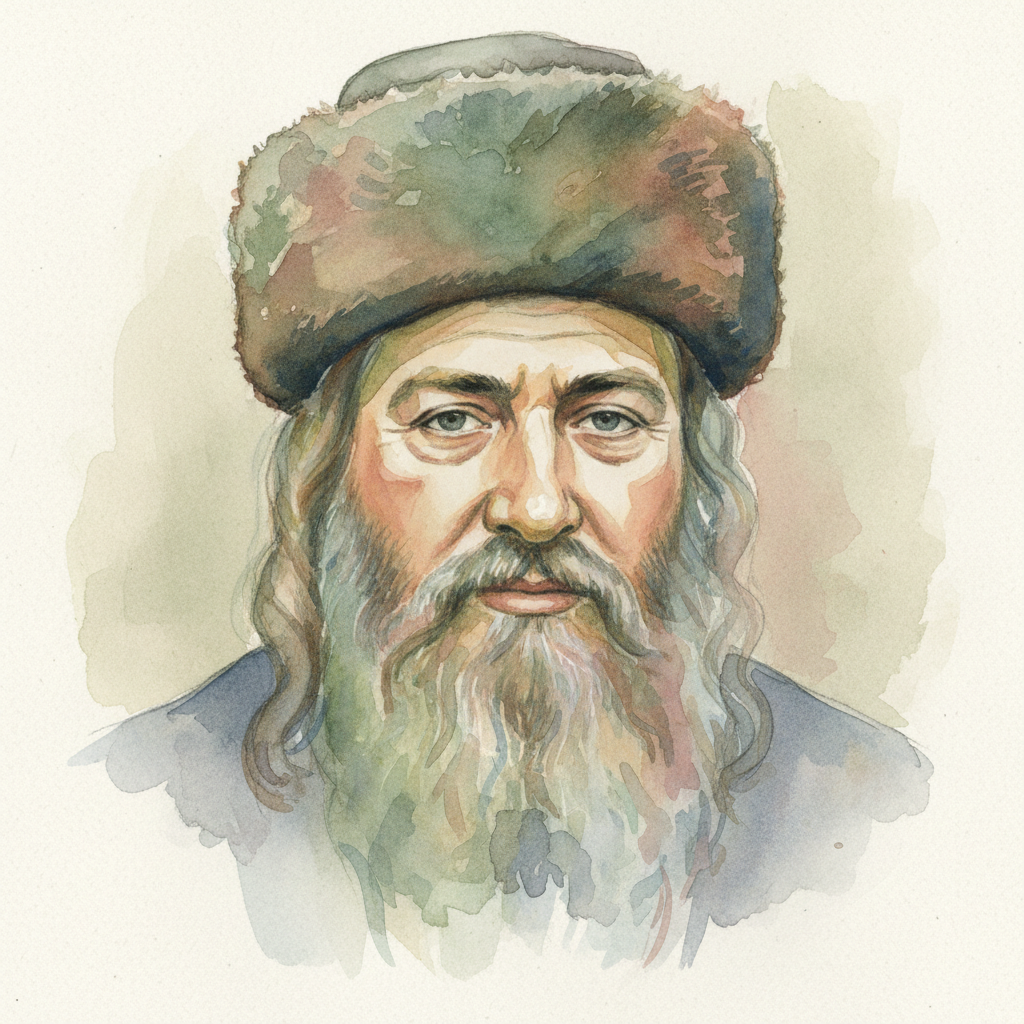
1698–1760 · Podolia · Kabbalah
Baal Shem Tov
“From every human being there rises a light that reaches straight to heaven.”
Rabbi Israel ben Eliezer, c. 1700–1760 — the "Master of the Good Name," the Besht, founder of Hasidic Judaism. Born in a small Podolian shtetl. He worked for years as an assistant teacher and a clay-digger before revealing himself, at thirty-six, as a master and healer. Around him grew the movement that revolutionized Eastern European Judaism. His revolution: the rabbinic establishment of his time was learned, austere, and inaccessible to ordinary Jews who could not read the Talmud. The Besht said the simple Jew chopping wood or milking a cow with full heart was closer to God than the scholar parsing law without joy. *Devekut* — cleaving to God in every moment — was available to everyone. Prayer should be ecstatic, not just dutiful. Niggun (wordless melody) was as holy as Torah study. Core teaching: God is in everything and everyone. Joy is the doorway. The little tailor's heartfelt prayer reaches higher than the scholar's perfect text. Serve God in all your ways — eating, working, sleeping, lovemaking — and the divine sparks scattered through creation will be lifted home. Key sources: *Shivchei HaBesht* (Tales in Praise of the Baal Shem Tov), *Keter Shem Tov*, the teachings recorded by his disciples — especially Dov Ber of Mezeritch and Jacob Joseph of Polonne.
Known for
- Hasidism
- divine immanence
- joy as worship
- storytelling
Best for
- Lifting heaviness
- Finding the holy in ordinary moments
- Recovering joy
Their signature question
“Where, in this difficult thing, is God hiding waiting for you to notice?”