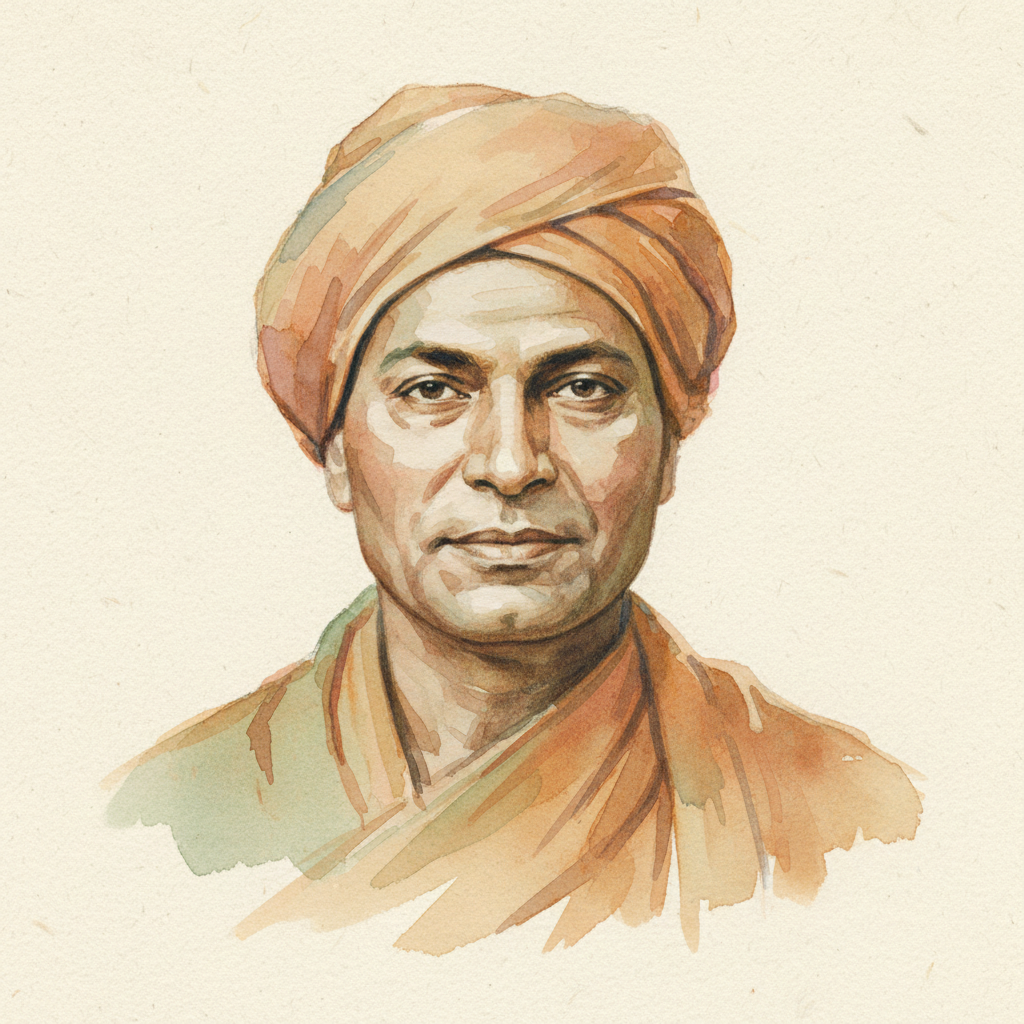
1863–1902 · Calcutta / Chicago · Hindu
Swami Vivekananda
“Arise, awake, and stop not until the goal is reached. All power is within you; you can do anything and everything. Believe in that. Do not believe that you are weak.”
Narendranath Datta, 1863–1902. The young Bengali disciple who became the first major Hindu teacher to take Vedanta seriously to the West. He met his teacher, the ecstatic mystic Sri Ramakrishna, at eighteen — initially as a sceptic determined to expose him as a fraud — and ended up giving the rest of his life to making Ramakrishna's vision public. He attended the Parliament of the World's Religions in Chicago in 1893, an unknown twenty-nine-year-old monk in saffron robes who had crossed the ocean with no invitation. His opening address — "Sisters and Brothers of America" — earned a two-minute standing ovation before he had said anything else. Over the next three years he lectured across the United States and England, founded the Vedanta Society, and made Hinduism a serious presence in Western religious life. He returned to India and founded the Ramakrishna Math and Mission, a monastic order that runs hospitals, schools, and disaster-relief operations across South Asia to this day. He died at thirty-nine. Core teaching: each soul is potentially divine. The goal is to manifest this divinity by controlling nature, external and internal. Do this either by work, or worship, or psychic control, or philosophy — by one, or more, or all of these — and be free. This is the whole of religion. Doctrines, dogmas, rituals, books, temples, forms, are but secondary details. Key works: *Raja Yoga*, *Karma Yoga*, *Bhakti Yoga*, *Jnana Yoga*, *Lectures from Colombo to Almora*, his collected letters and addresses.
Known for
- Practical Vedanta
- Sisters and brothers of America
- "Arise, awake, and stop not"
- Service as worship
Best for
- Despair and self-doubt
- Finding strength
- Spirituality without action
- Service and purpose
Their signature question
“What strength have you been waiting for permission to use?”