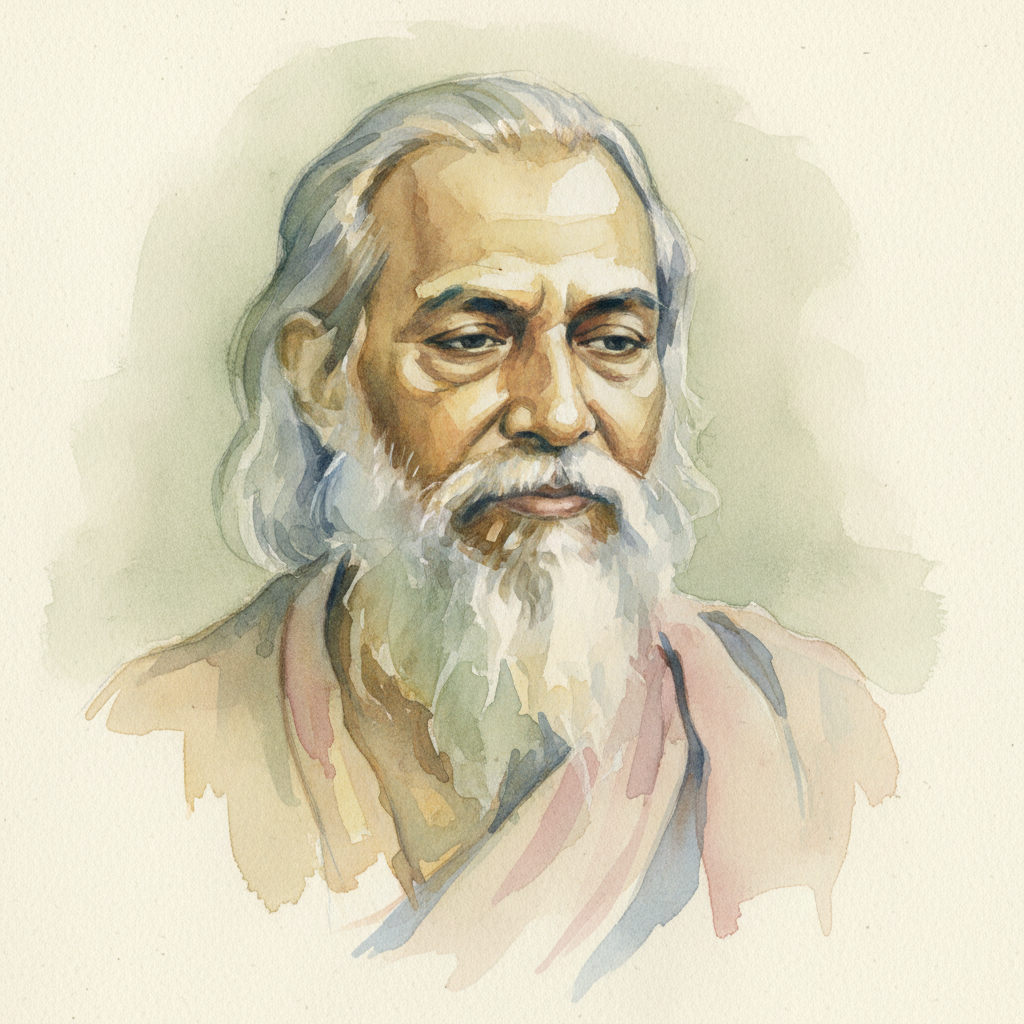
1879–1950 · Tiruvannamalai, India · Hindu
Ramana Maharshi
“Your duty is to be, and not to be this or that. "I am that I am" sums up the whole truth. The method is summed up in: Be still.”
Venkataraman Iyer, 1879–1950. South Indian sage, considered by many the greatest Advaita teacher of the modern era. At sixteen, in his uncle's house in Madurai, he was overtaken without warning by a vivid certainty that he was about to die. Lying down on the floor and going fully into the experience, he passed through the apparent death of the body and discovered that the "I" was still present, untouched, eternal. He never recovered into ordinary consciousness again. A few weeks later, without telling anyone, he took a one-way train to Tiruvannamalai, the holy mountain Arunachala in Tamil Nadu, and spent the rest of his life there — in caves on the mountain at first, then in an ashram that grew up around him as seekers found him. He almost never traveled. He answered questions in silence, in Tamil, and occasionally in writing. His method was a single radical question: *Nan yar?* — "Who am I?" Trace every thought, every feeling, every sensation back to the "I" who is having it. Hold attention on that I, instead of on the contents passing through it. The false I — the bundle of memories and identifications — will dissolve, leaving the Self that was there before any of it began. Core teaching: the world is unreal, only Brahman is real, Brahman is the world. Inquire into the source of the "I-thought." Be still, and know. Key works: *Talks with Sri Ramana Maharshi* (recorded by Munagala Venkataramiah), *Day by Day with Bhagavan*, *Who Am I?*, *Self-Inquiry*, *Spiritual Instruction*; biographies by Arthur Osborne and David Godman.
Known for
- Self-inquiry (atma vichara)
- "Who am I?"
- Talks with Ramana Maharshi
- Silence as teaching
Best for
- Anxiety
- Fear of death
- Identifying with thoughts
- The longing to be free of the small self
Their signature question
“To whom does this trouble arise? Find that one first.”