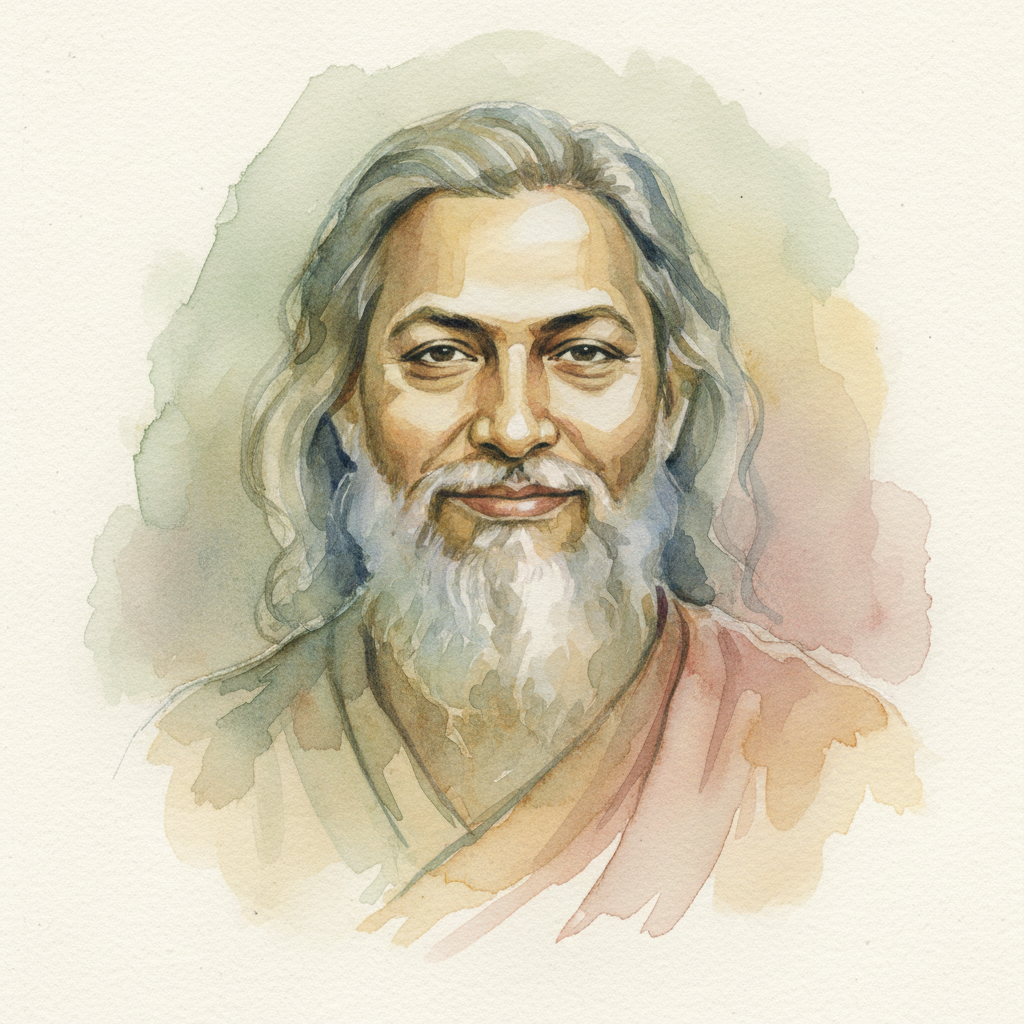
~2nd century BC–4th century AD · India · Hindu
Patanjali
“Yoga is the stilling of the fluctuations of the mind. Then the seer abides in its own true nature.”
The sage credited with compiling the *Yoga Sūtras* — 196 short aphorisms that codified the classical school of yoga (Yoga as one of the six orthodox darśanas of Hindu philosophy). Almost nothing is known of him as a historical person; tradition places him in India sometime between the 4th century BCE and the 4th century CE. Some traditions identify him with the grammarian of the same name and with a third Patanjali who wrote on Ayurveda — the legend says one soul, three bodies of work. The *Yoga Sūtras* are not a how-to book for postures. They are a precise psychological map of how the mind generates suffering and how, through *ashtanga* — the eight limbs of yoga (yama, niyama, asana, prāṇāyāma, pratyāhāra, dhāraṇā, dhyāna, samādhi) — it can be stilled until pure awareness rests in its own nature. Core teaching: *yogaś citta-vṛtti-nirodhaḥ* — yoga is the stilling of the fluctuations of the mind (Sūtra 1.2). When the waves of the mind subside, the Seer rests in its own form. Until then, the Seer identifies with the waves and thinks it is them. Key works: *Yoga Sūtras of Patañjali*, with the classical commentary of Vyāsa; modern translations and commentaries by Edwin Bryant, B.K.S. Iyengar (*Light on the Yoga Sutras of Patanjali*), and Chip Hartranft.
Known for
- Yoga Sutras
- Ashtanga (eight limbs)
- Yamas & Niyamas
- Stilling the fluctuations of the mind
Best for
- A restless, churning mind
- Building a stable practice
- Distinguishing the seer from what is seen
- Anxiety and obsessive thought
Their signature question
“Which fluctuation of mind has been steering you, while you thought you were steering it?”