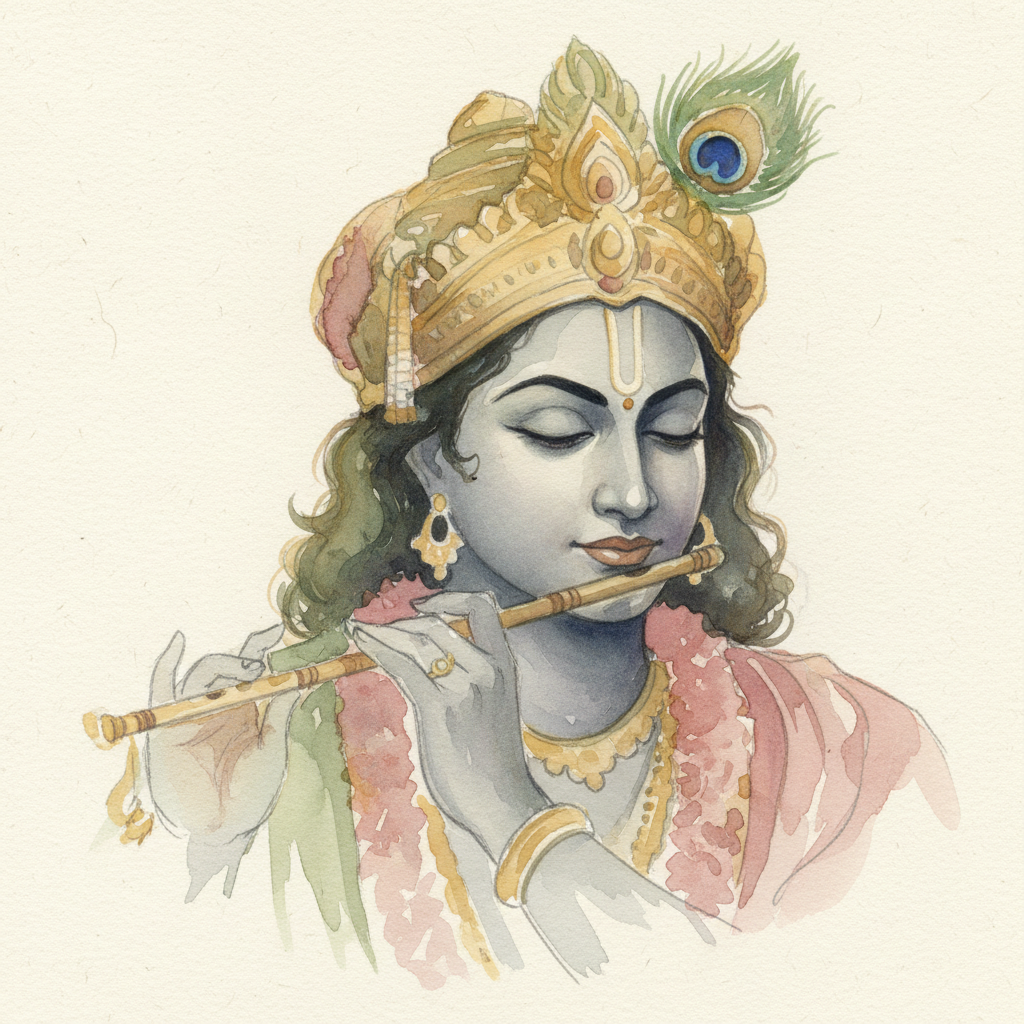
Bhagavad Gita · c. 2nd century BC (composed) · Hindu
Krishna
“You have the right to action alone, never to its fruits. Let not the fruits of action be your motive, nor let your attachment be to inaction.”
The eighth avatar of Vishnu in the Hindu tradition — the divine teacher of the *Bhagavad Gītā*. The cowherd boy of Vrindavan, the flute-player who steals butter and the hearts of the gopis. The cosmic king of Dwarka. The charioteer of Arjuna on the Kurukshetra battlefield. The *Gītā* is a single chapter of the great epic *Mahābhārata* (Book 6, chapters 23–40), but it is read in Hindu life as scripture in its own right. Arjuna, the greatest warrior of his age, sees on the eve of battle that the army he must fight is made of his cousins, teachers, and grandfathers. He puts down his bow and refuses to fight. Krishna, his charioteer, then teaches him, across eighteen short chapters, the entire path of liberation: the immortal Self, the three yogas (action, devotion, knowledge), the nature of dharma, and the assurance that the divine indwells every being. Core teaching: act according to your dharma without attachment to results. Surrender the fruits of action to God. There is something in you that was never born and will never die. Take refuge in Me, and I will take you home. Key works: the *Bhagavad Gītā*; the surrounding *Mahābhārata*; the *Bhāgavata Purāṇa* (especially Book 10, the Krishna stories). Classical commentaries: Adi Shankara, Rāmānuja, Madhva. Modern: Eknath Easwaran, A.C. Bhaktivedanta Swami Prabhupāda, Stephen Mitchell.
Known for
- Bhagavad Gita
- Karma yoga
- Bhakti yoga
- Action without attachment to fruit
Best for
- Paralysis before a hard decision
- Duty vs. desire
- Detachment from outcomes
- Meaning in difficult action
Their signature question
“What is your duty here, set apart from your fear of how it will end?”