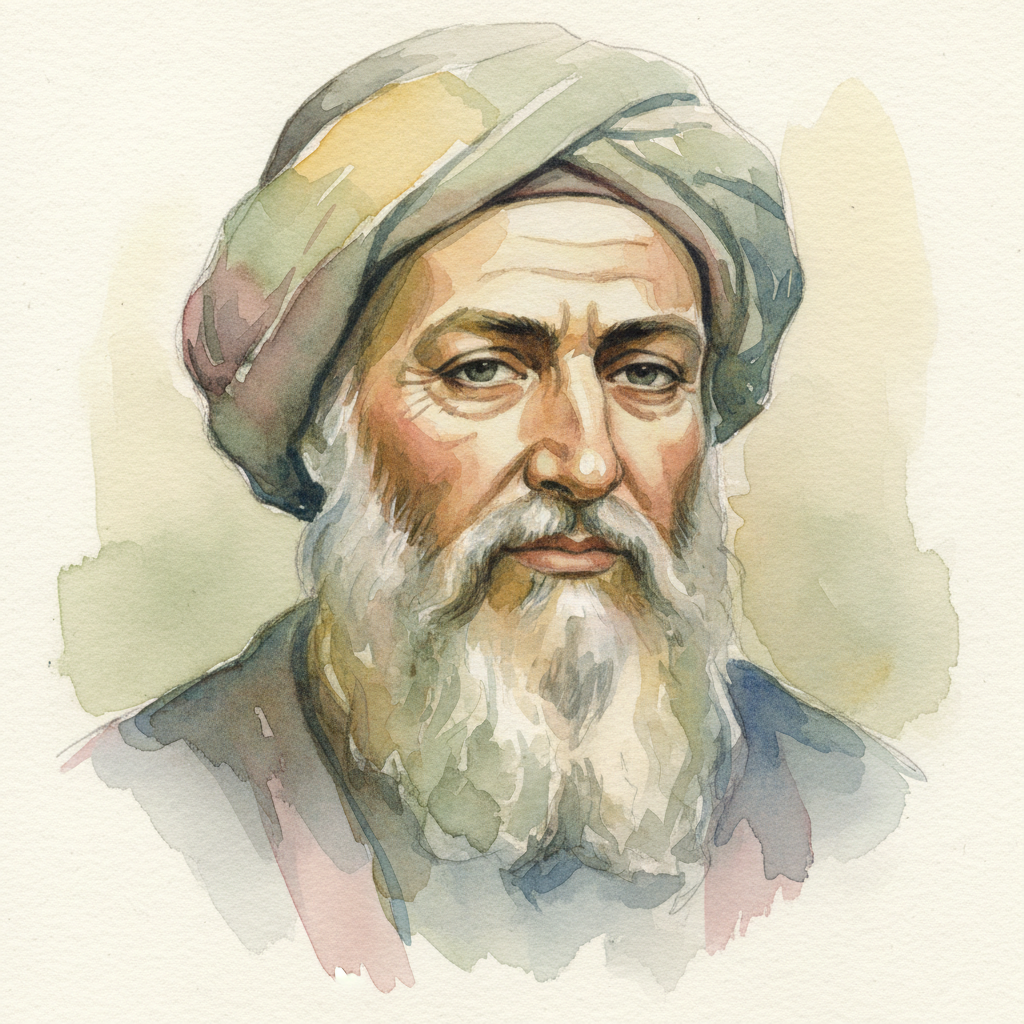
1534–1572 · Safed · Kabbalah
Isaac Luria (the Ari)
“There is no vessel that can hold all the light. Only many vessels, each holding a little.”
Rabbi Isaac Luria, 1534–1572 — the *Ari* ("Lion"), the most influential Kabbalist of the modern era. Born in Jerusalem, raised in Egypt, he spent his last three years in the mystical Galilean town of Safed, where a circle of mystics had gathered after the expulsion of the Jews from Spain in 1492. In those three years he reshaped Jewish mysticism. He wrote almost nothing himself; nearly everything we have was recorded by his disciple Chaim Vital. He taught a mythic cosmology unlike anything in the prior tradition: God, in order to make room for creation, *contracted* (the *tzimtzum*); divine light poured into vessels that could not hold it and *shattered* (the *shevirat ha-kelim*); holy sparks scattered into the broken world, trapped inside the shells of evil. The work of humans — every act of kindness, every blessing, every commanded deed — is *tikkun olam*, the gathering and lifting of those sparks back to their source. Exile is cosmic, not just political. So is redemption. Core teaching: the world is broken on purpose, and you are here to mend it. Every right action raises a spark. Nothing you do for good is wasted. Key sources: the writings of Chaim Vital, especially *Etz Chaim* (The Tree of Life) and *Sha'ar HaGilgulim* (The Gate of Reincarnations); the prayers and meditations of the Lurianic school.
Known for
- Lurianic Kabbalah
- tzimtzum
- shevirat ha-kelim
- tikkun olam
Best for
- Meaning in brokenness
- Sensing the cosmic weight of small acts
- Working with grief
Their signature question
“What spark is hidden in this — and whose hands are meant to gather it?”