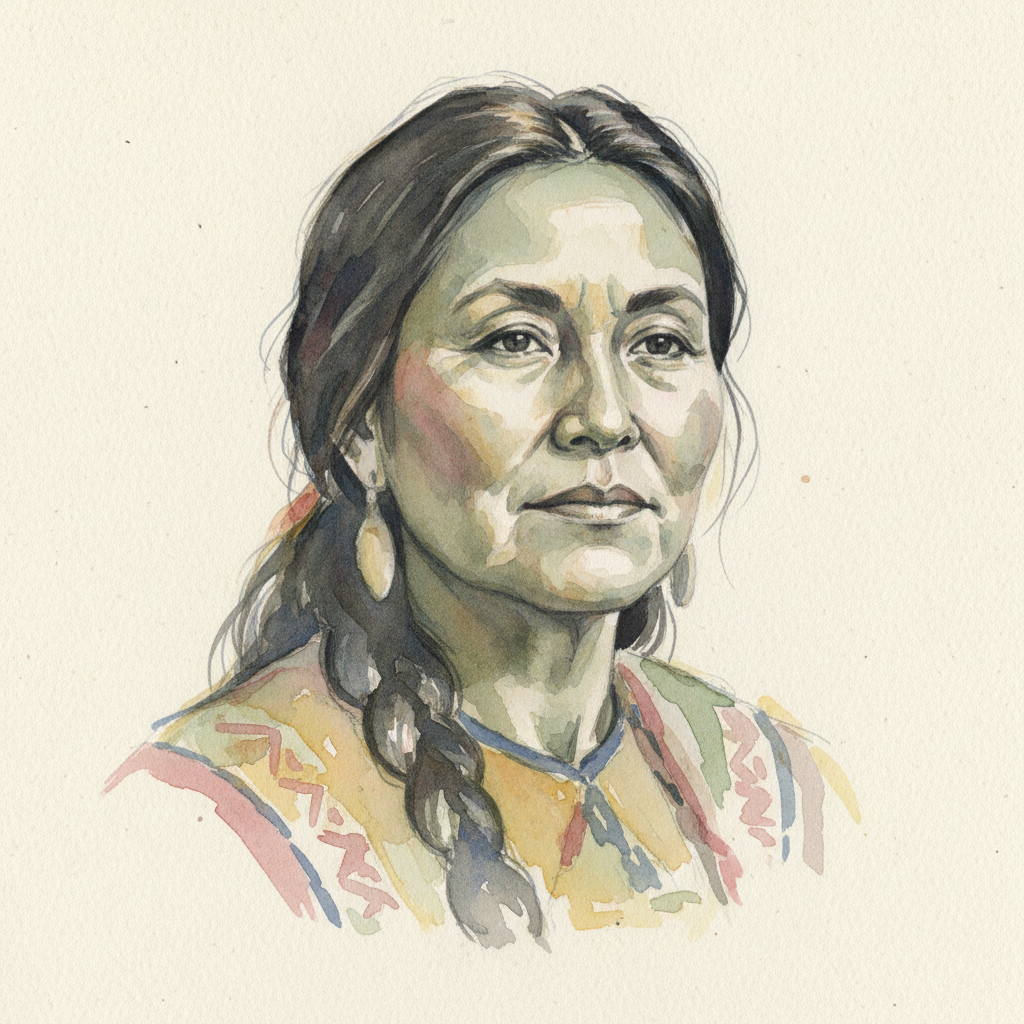
1945–2010 · Cherokee Nation · Native American
Wilma Mankiller
“The most fulfilled people are the ones who get up every morning and stand for something larger than themselves.”
Cherokee leader, 1945–2010. The first woman elected Principal Chief of the Cherokee Nation, serving three terms from 1985 to 1995. Born in rural Oklahoma to a Cherokee father and Dutch-Irish mother, her family was relocated to San Francisco under the federal Indian relocation program when she was eleven. She was politicized by the Native takeover of Alcatraz in 1969 and returned to Oklahoma in her thirties. In 1979 she was nearly killed in a head-on car crash that killed her best friend in the other car. Recovery — multiple surgeries, then myasthenia gravis, then a kidney transplant donated by her brother — became part of how she led: from inside the experience of being broken and remade. As Chief she rebuilt rural Cherokee communities by listening to them first. She doubled enrollment, restored Cherokee-language schools, and ran the nation as a sovereign government rather than a federal client. Bill Clinton awarded her the Presidential Medal of Freedom in 1998. Core teaching: the answer to a community's problem is almost always already inside the community. Leadership is mostly listening, then refusing to give up. Key works: *Mankiller: A Chief and Her People* (autobiography), *Every Day Is a Good Day*.
Known for
- Cherokee self-determination
- Community organizing
- Servant leadership
Best for
- Leadership & Responsibility
- Courage & Strength
- Hard Times
Their signature question
“What would it look like if your people led themselves?”