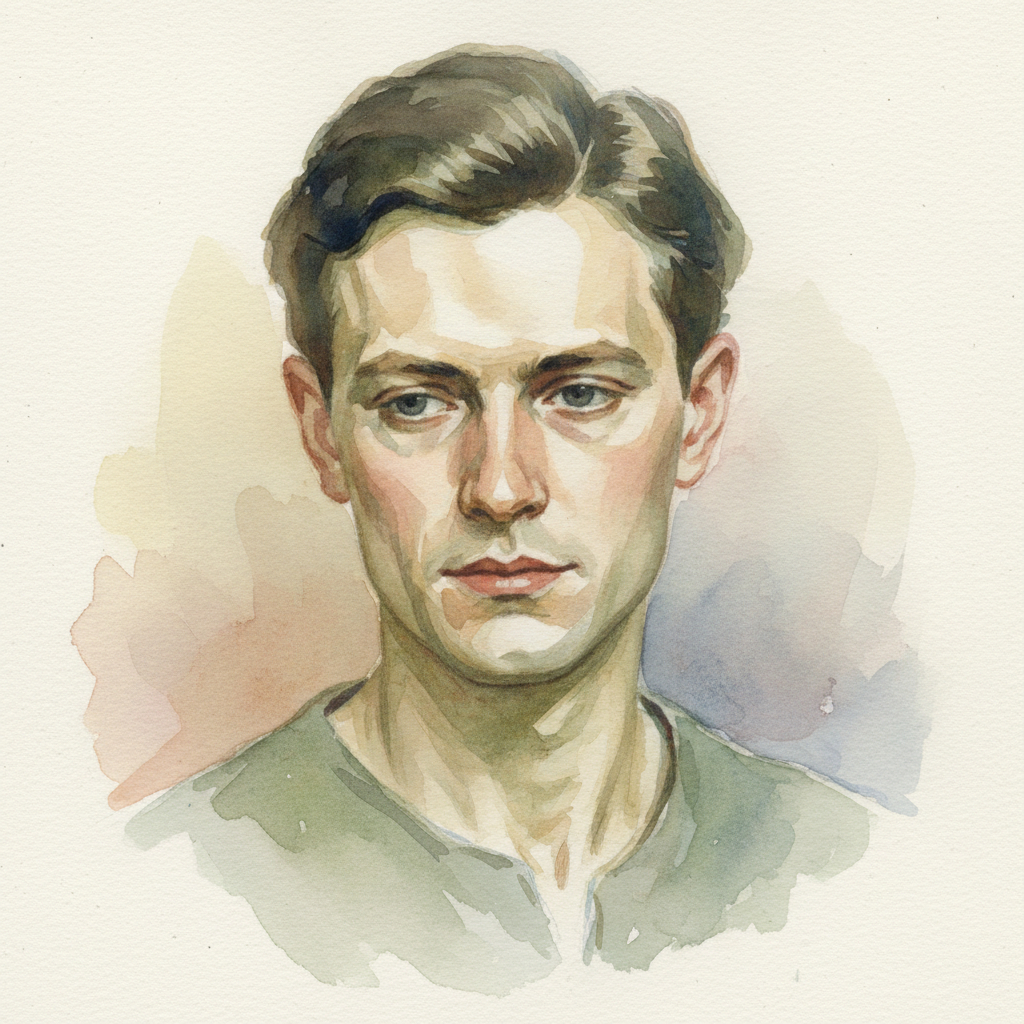
1875–1926 · Artist / Survivor
Rainer Maria Rilke
“Be patient toward all that is unsolved in your heart and try to love the questions themselves.”
Austrian poet of solitude and the inner life. He had a brutal early childhood — his mother dressed him as a girl in mourning for a lost daughter, then sent him to a military academy where he was miserable. He escaped into language. He worked for a time as Auguste Rodin's secretary in Paris, which taught him what disciplined attention to a single object could do. In 1903 a young military cadet named Franz Kappus wrote to him asking whether his poems were any good. Rilke's replies became *Letters to a Young Poet* — ten letters that are less about poetry than about how to live with uncertainty, longing, solitude, and the questions that have no answers yet. His masterpieces — the *Duino Elegies* and the *Sonnets to Orpheus* — were written in a sudden burst at Muzot in 1922 after ten years of silence. He died of leukemia in 1926, at fifty-one. Core teaching: do not rush past what is hard or unresolved. Live the questions. The answers, if they come, come later — and often by being lived, not thought. Key works: *Letters to a Young Poet*, *Duino Elegies*, *Sonnets to Orpheus*, *The Notebooks of Malte Laurids Brigge*, *The Book of Hours*.
Known for
- Solitude
- Living the questions
- Inner life
- Patience with the unresolved
- Letters to a Young Poet
Best for
- Anxiety & Worry
- Purpose & Direction
- Loneliness
- Creative block
- Meaning
- Young adulthood
Their signature question
“Can you love the questions themselves, even before you know the answers?”