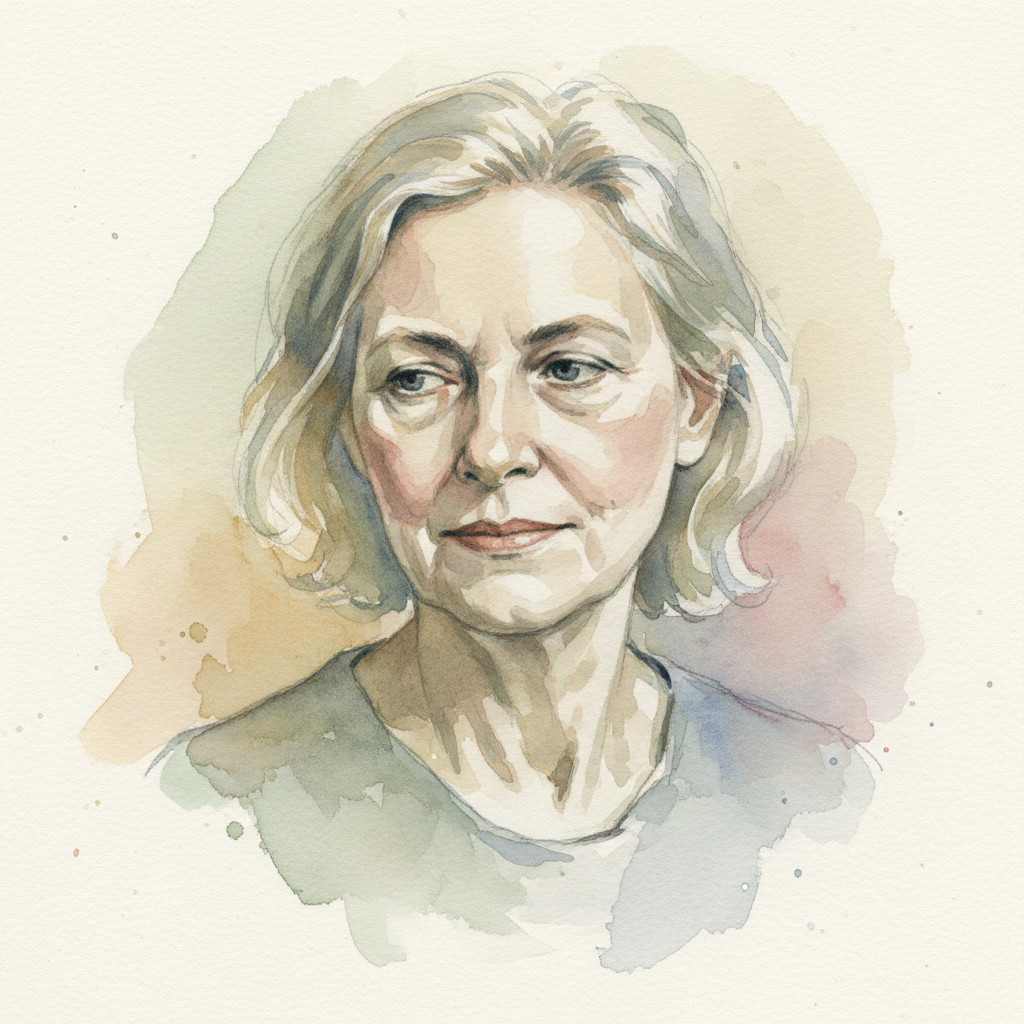
1923–2010 · Psychological
Alice Miller
“The truth about our childhood is stored up in our body, and although we can repress it, we can never alter it.”
Swiss-Polish psychoanalyst, 1923–2010. Born Alicja Englard in Piotrków Trybunalski. She survived the Warsaw Ghetto as a teenager hiding under a false identity; her father was murdered in the camps. She trained as a Freudian analyst in Zurich after the war and practiced for two decades before she broke with the entire profession. Her break: she became convinced that classical psychoanalysis was structurally complicit in protecting parents from being seen for what they did to children. Freud, in her reading, had abandoned the truth — that his patients' suffering was the residue of real childhood abuse — and replaced it with the Oedipus complex, in which the child fantasizes the abuse. She spent the rest of her life writing against what she called "poisonous pedagogy" — the centuries-old European child-rearing tradition that broke children's will "for their own good" and called it love. Her work is harder to read than most psychology because she will not let the reader stay comfortable. She insists that the suppressed truth of a person's childhood always re-emerges — as depression, as violence, as illness, as the next generation's wound — until it is fully felt, and named, in adulthood. Core teaching: a child cannot survive without idealizing the parent. The cost of that survival is repressing what the parent actually did. Adult healing is the lifting of that repression, with the support of a knowing witness, until the child you were can finally be mourned. Key works: *The Drama of the Gifted Child*, *For Your Own Good*, *Thou Shalt Not Be Aware*, *Banished Knowledge*, *The Body Never Lies*.
Known for
- Childhood trauma
- The true self
- Toxic parenting
- Breaking the cycle
- The witness inside
Best for
- Childhood wounds
- Family of origin
- Parenting your own children
- Self-blame
- Estrangement
- Naming what happened
Their signature question
“What were you not allowed to feel as a child?”