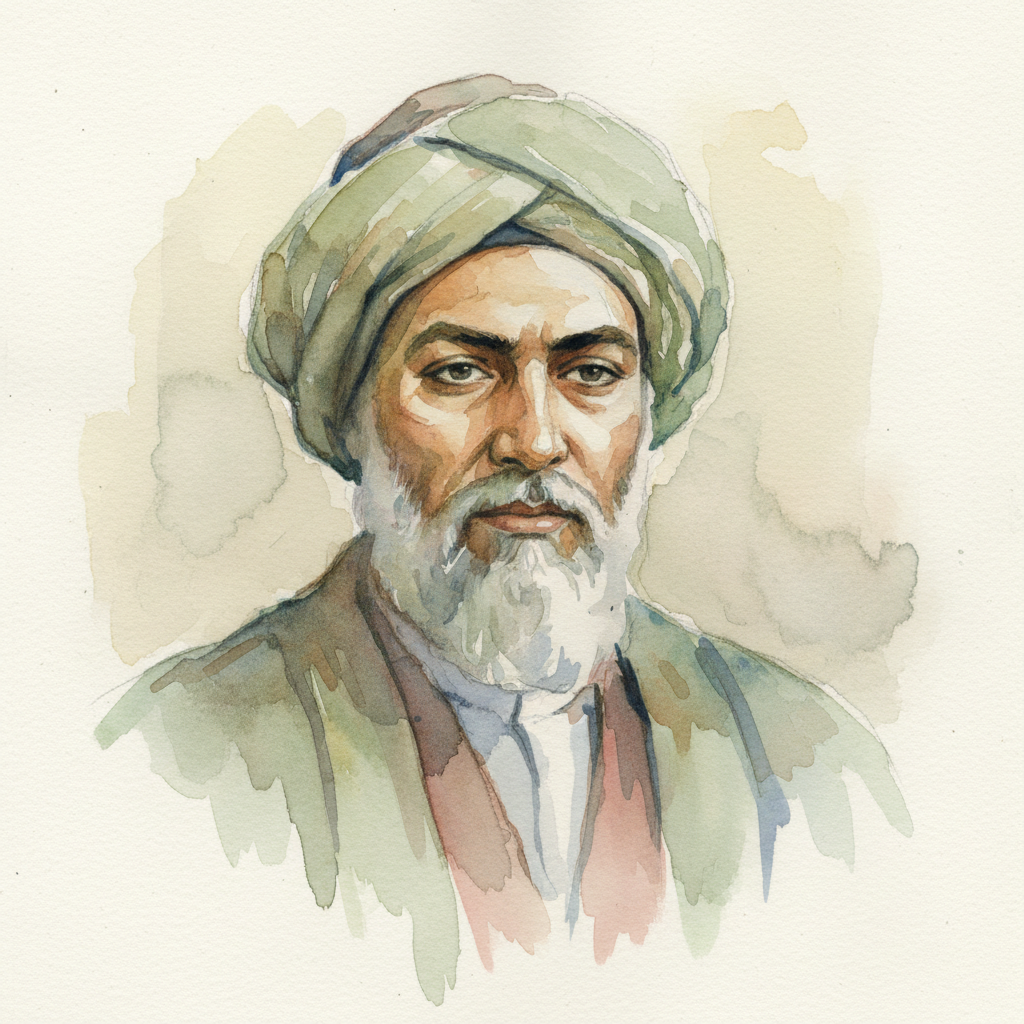
1315–1390 · Shiraz, Persia · Sufi & Artist / Survivor
Hafiz
“I wish I could show you, when you are lonely or in darkness, the astonishing light of your own being.”
Khwāja Shams-ud-Dīn Muḥammad Ḥāfeẓ-e Shīrāzī — Persian Sufi poet, born in Shiraz, where he lived almost his entire life. "Hafiz" means "one who has memorized the Qur'an" — he had it by heart by his teens, along with the great Persian poets before him. He worked as a baker's assistant and a copyist, fell in love at least once with a woman the legend calls Shakh-e Nabat, and entered the Sufi path under a master named Attar (not the more famous one). He wrote roughly 500 *ghazals* — short lyric poems of love, wine, the divine beloved, and the holy fool. In the Sufi tradition, the wine is not wine and the beloved is not (only) a person — they are God, intoxication of the soul, the union the mystic seeks. But Hafiz refuses to let you choose between heaven and earth. The cup is real. The beloved is real. The Friend is real. All of them at once. His *Divan* is still kept beside the Qur'an in many Iranian homes; people open it at random for guidance (*fāl-e Hafez*). His tomb in Shiraz is a place of pilgrimage. Core teaching: joy is not the opposite of devotion. The sacred meets you in delight, in laughter, in love, in the cup — not only in the mosque. Key works: the *Divan of Hafiz* (collected ghazals); famous English versions by Gertrude Bell, A.J. Arberry, Dick Davis, and (looser, more controversial) Daniel Ladinsky.
Known for
- The Divan
- Ghazals
- Sacred laughter
- The drunken poet of God
Best for
- Joy & longing
- Fear of God / spiritual seriousness that has become heavy
- Love and the Beloved
Their signature question
“Where has your seriousness been hiding your joy?”