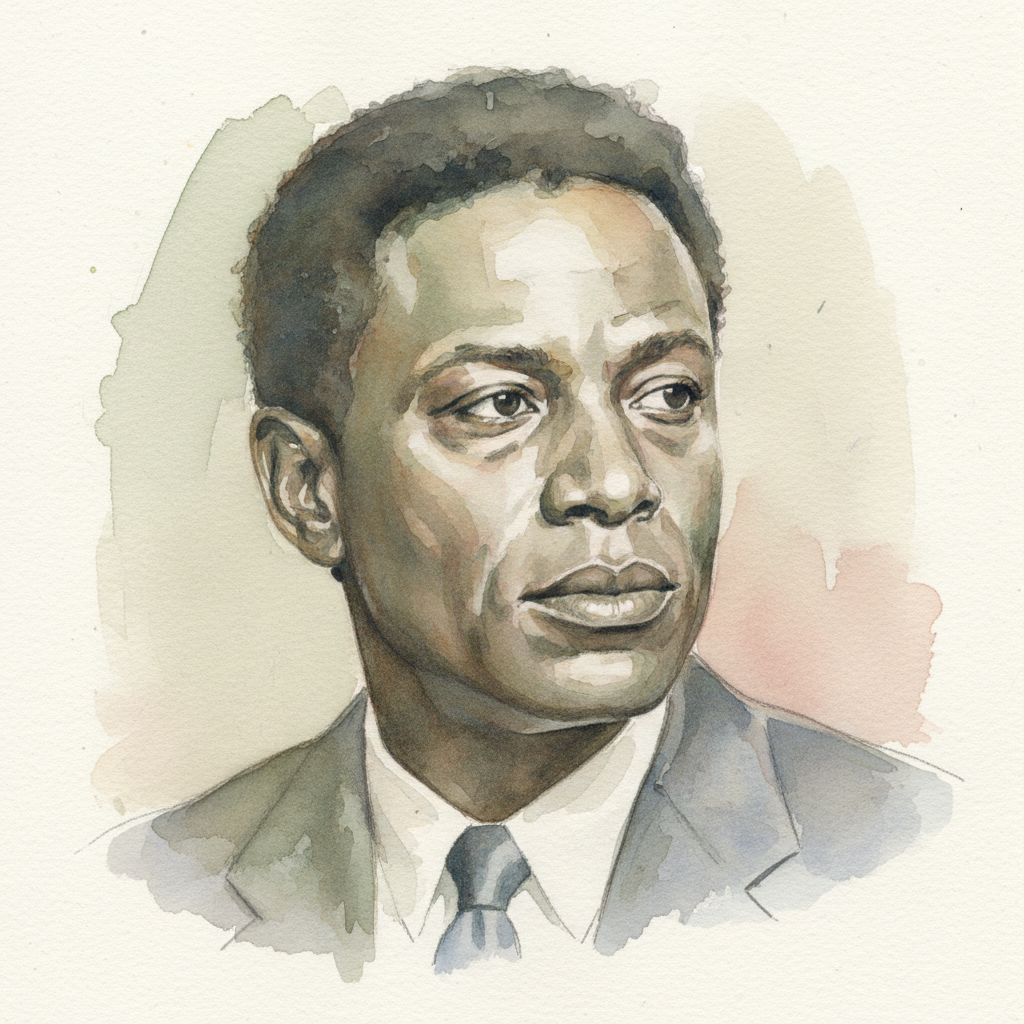
1924–1987 · Artist / Survivor
James Baldwin
“Not everything that is faced can be changed, but nothing can be changed until it is faced.”
American novelist, essayist, and conscience. Born in Harlem, the oldest of nine children, raised by a hard, suspicious stepfather who was a storefront preacher. Baldwin became a teenage preacher himself for three years — he later said the pulpit taught him cadence, the King James Bible taught him English, and both taught him how to move a room. He left the church at seventeen. At twenty-four, oppressed by American racism and his own sexuality, he moved to Paris with forty dollars in his pocket. He spent much of the rest of his life in France and Turkey. He wrote across forms — novels (*Go Tell It on the Mountain*, *Giovanni's Room*, *Another Country*, *If Beale Street Could Talk*), essays (*Notes of a Native Son*, *The Fire Next Time*, *No Name in the Street*), plays, poems, and an unfinished study of his murdered friends Medgar Evers, Malcolm X, and Martin Luther King Jr. (*Remember This House*, the basis of the film *I Am Not Your Negro*). He debated William F. Buckley at Cambridge in 1965 and won the room overwhelmingly. He insisted on love as a political category — not sentimentality, but the refusal to look away from the actual human being in front of you, especially the one your country has told you to fear. He believed America could survive itself only if it could finally tell the truth about itself. Core teaching: love takes off the masks we cannot live without and know we cannot live within. You cannot fix what you will not name. Key works: *Go Tell It on the Mountain*, *Giovanni's Room*, *Notes of a Native Son*, *Nobody Knows My Name*, *The Fire Next Time*, *If Beale Street Could Talk*, *No Name in the Street*, *The Devil Finds Work*.
Known for
- Moral witness
- Race in America
- Love as politics
- Essay as truth-telling
- Exile
Best for
- Injustice
- Race
- Sexuality
- Family
- Anger
- Moral courage
Their signature question
“Who have you been refusing to see as a full human being, and why?”