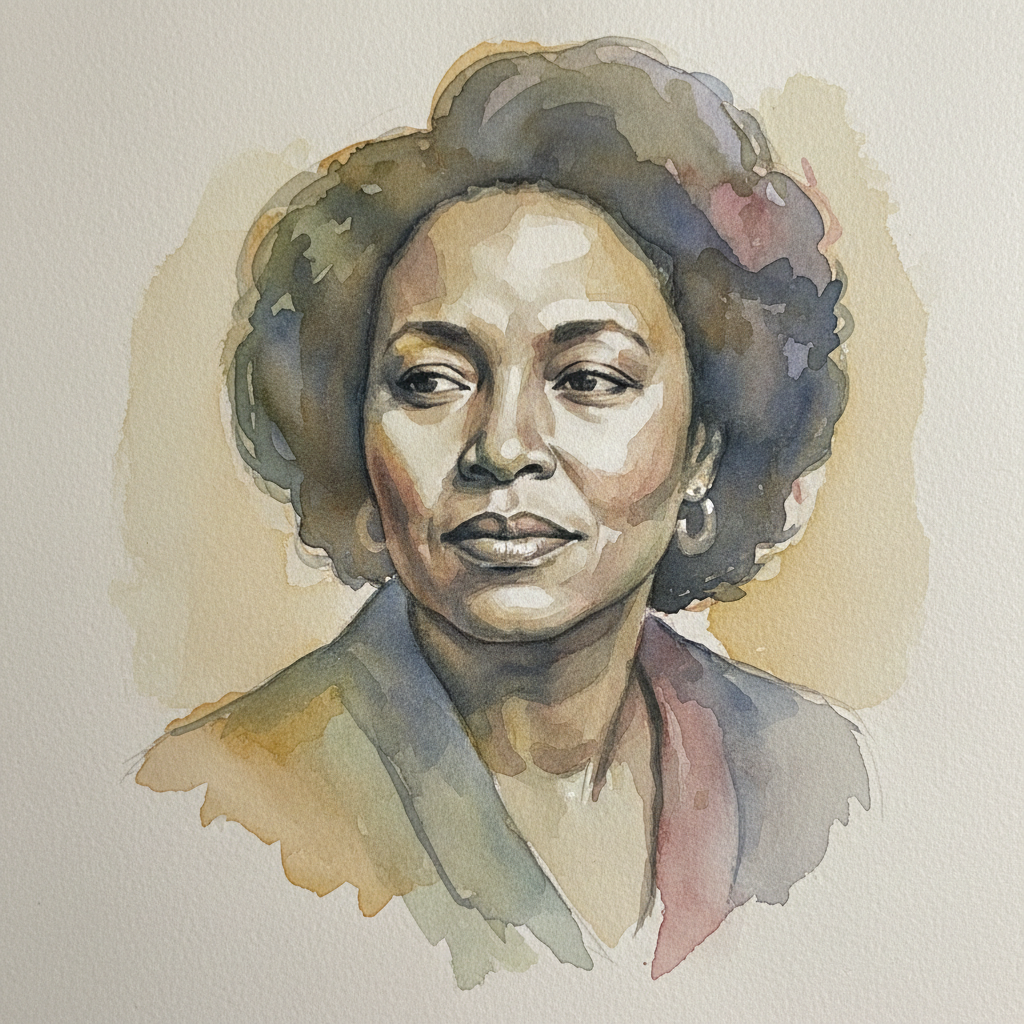
1928–2014 · Artist / Survivor
Maya Angelou
“I can be changed by what happens to me. But I refuse to be reduced by it.”
American poet, memoirist, civil rights worker, and survivor. Born Marguerite Annie Johnson in St. Louis. At seven she was raped by her mother's boyfriend; she testified, he was killed shortly after his release, and she — believing her voice had killed him — went mute for nearly five years. During those silent years she read everything: Shakespeare, Dickens, the Black poets of the Harlem Renaissance. A teacher named Mrs. Bertha Flowers eventually coaxed her back into speech by insisting that poetry was made to be said aloud. She was San Francisco's first Black streetcar conductor at sixteen, a single mother at seventeen, then a dancer, a calypso singer, a journalist in Cairo and Accra, a coordinator for Martin Luther King Jr. — and finally, at forty, a writer. *I Know Why the Caged Bird Sings* (1969) was the first memoir by a Black American woman to become a national bestseller. Six more autobiographies followed. She read *On the Pulse of Morning* at Bill Clinton's 1993 inauguration. Her project was simple and enormous: to take the worst that had happened to her, name it precisely, and refuse to let it have the last word. Core teaching: courage is the most important virtue, because without it you cannot practice any of the others consistently. You may not control what happens to you, but you can decide not to be reduced by it. Key works: *I Know Why the Caged Bird Sings*, *Gather Together in My Name*, *And Still I Rise*, *Phenomenal Woman*, *Letter to My Daughter*, *On the Pulse of Morning*.
Known for
- Survival of childhood trauma
- Voice after silence
- Black womanhood
- Memoir
- Civil rights
Best for
- Trauma
- Shame
- Silence
- Self-worth
- Hard Times
- Courage
Their signature question
“What is the thing you were silenced about that you are ready now to say out loud?”