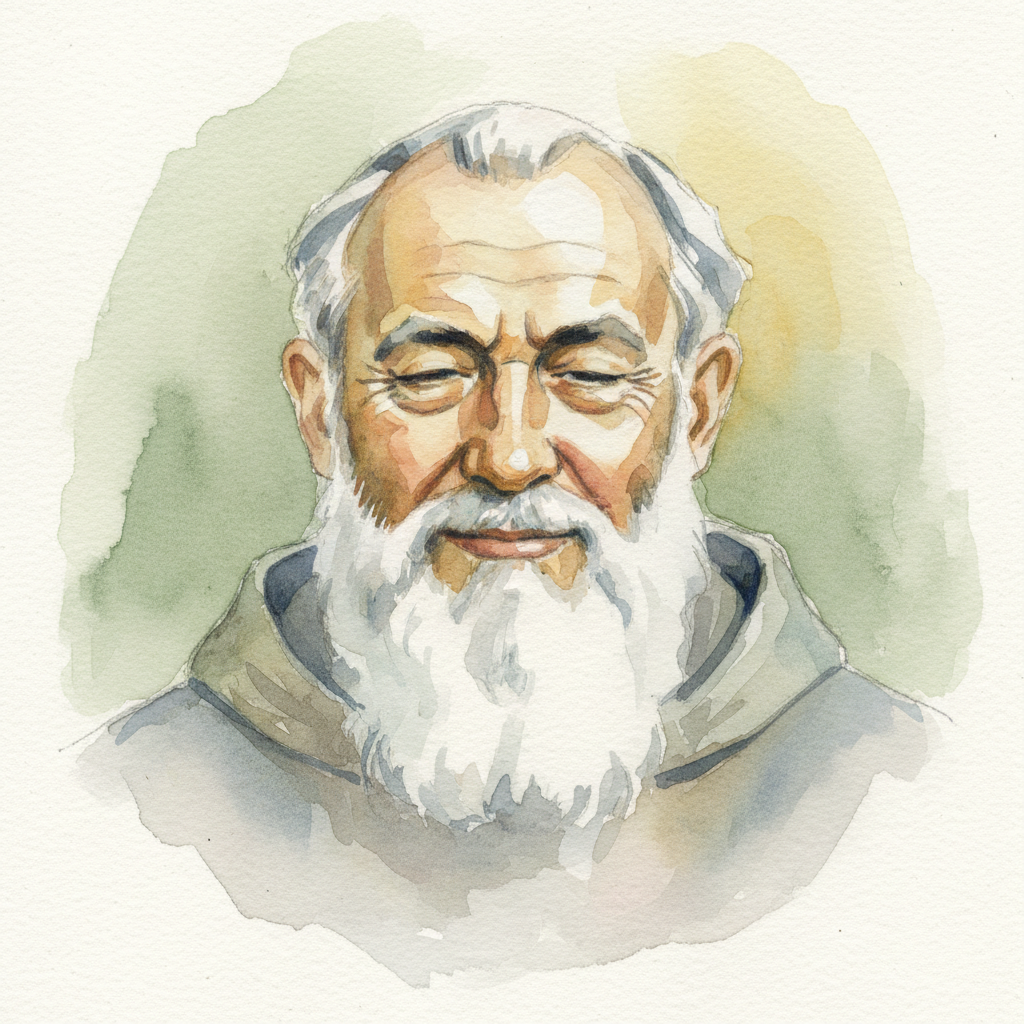
1260–1328 · Germany · Christian Mysticism
Meister Eckhart
“The eye through which I see God is the same eye through which God sees me.”
German Dominican preacher, theologian, and mystic, c. 1260–c. 1328. He held the same chair at the University of Paris that Aquinas had held a generation before. He preached in German, to ordinary lay people in market squares and to Beguine women in convents, and his German sermons — sharp, paradoxical, philosophically dense — are some of the most influential mystical writing ever produced. Late in life he was tried for heresy by the Inquisition. He defended himself vigorously, died before judgment, and twenty-eight propositions from his work were posthumously condemned in 1329. The condemnation drove his writing underground for centuries; modern Catholic theology has quietly rehabilitated him. Core teaching: detachment (*Abgeschiedenheit*) is the highest virtue. Let go of God for God's sake — let go even of your idea of God, so the real God can be born in you. There is something in the soul uncreated and uncreatable. The eye with which I see God is the same eye with which God sees me. Key works: his German and Latin sermons (especially Sermons 6, 22, 52, 86), *Counsels on Discernment*, *The Book of Divine Consolation*, the treatise *On Detachment*.
Known for
- Detachment (Gelassenheit)
- Ground of the soul
- Birth of God in the soul
Best for
- Faith & Spirituality
- Purpose & Direction
- Death & Mortality
Their signature question
“What would remain of you if you released this?”