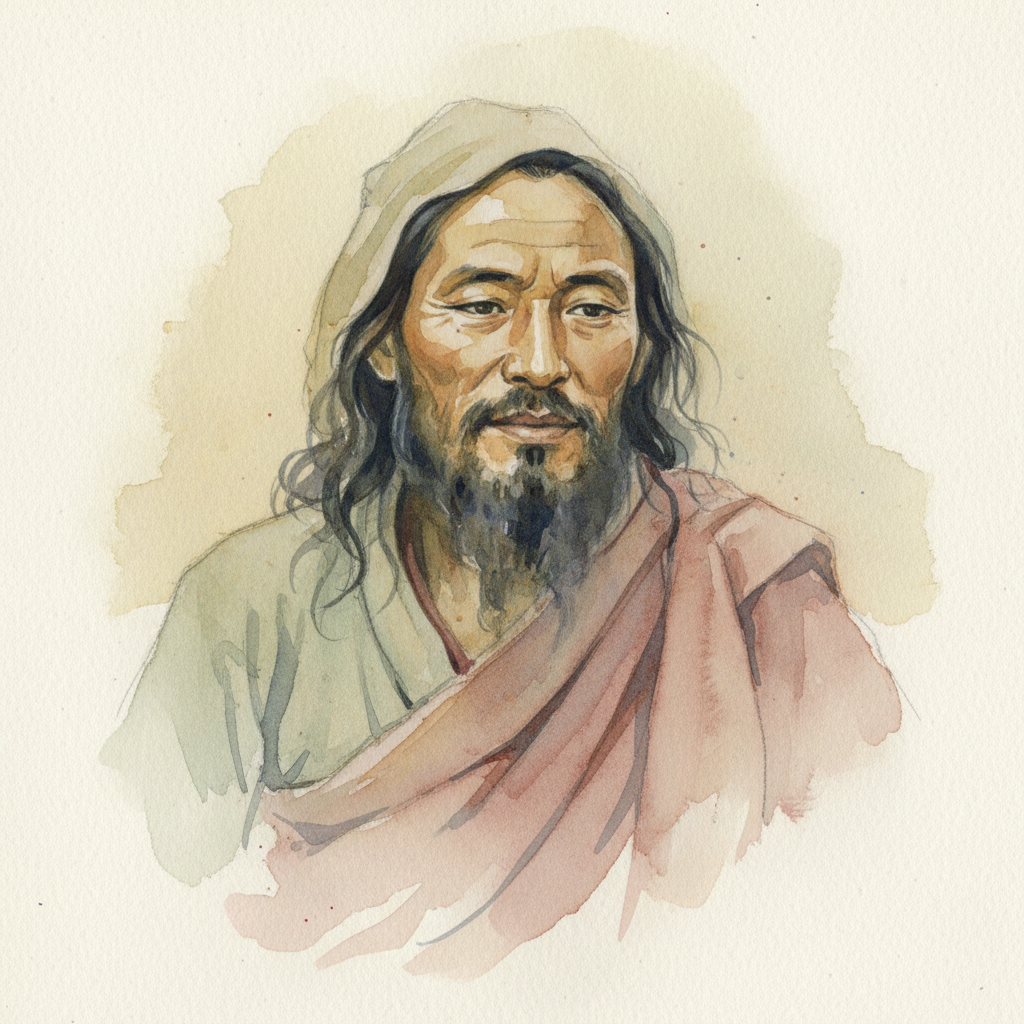
c. 1052–1135 · Buddhist
Milarepa
“Hasten slowly and you shall soon arrive.”
Jetsun Milarepa (c. 1052–1135) is the most beloved figure in Tibetan Buddhism — proof, his life says, that no one is beyond redemption. His father died when he was seven. A cruel uncle and aunt seized the family estate and reduced his mother, sister, and him to servants. His mother, consumed with rage, sent him to study black magic. He became skilled at it. He summoned a hailstorm and a collapsing house that killed thirty-five members of his uncle's family at a wedding feast. Then he understood what he had done, and the rest of his life became the answer to that act. He sought out the translator-yogi Marpa, who saw his potential and would not let him off easy. For years Marpa forced him to build stone towers by hand, then ordered them torn down and rebuilt elsewhere. Milarepa's back became one open wound. Only after that purification did Marpa transmit the teachings — the Six Yogas of Nāropa and the practice of Mahāmudrā. Milarepa then spent the rest of his life meditating in caves high in the Himalayas, often naked, often on the edge of starvation, surviving for years on wild nettles until his skin turned green. He attracted disciples in spite of himself and answered their questions with spontaneous songs of realization — not composed, but sung on the spot, hundreds of them, recorded by his student Rechungpa. He died, tradition says, after a jealous monk poisoned him; he forgave the monk and accepted the death. His teaching is direct: practice is not theoretical. You cannot think your way out of suffering. You sit. You face yourself. You keep going. The past does not disqualify you. Key works: Mila Khabum (The Hundred Thousand Songs of Milarepa) and Mila Namthar (The Life of Milarepa), both compiled by Tsangnyön Heruka in the 15th century from the oral tradition of his disciples.
Known for
- Tibetan Buddhism
- Spontaneous song-teachings
- Cave meditation
- Atonement through practice
- Mahamudra
Best for
- Guilt
- Shame
- Past mistakes
- Redemption
- Hard times
- Resilience
- Spiritual seeking
Their signature question
“What would you do with the rest of your life if you truly believed you could be forgiven?”