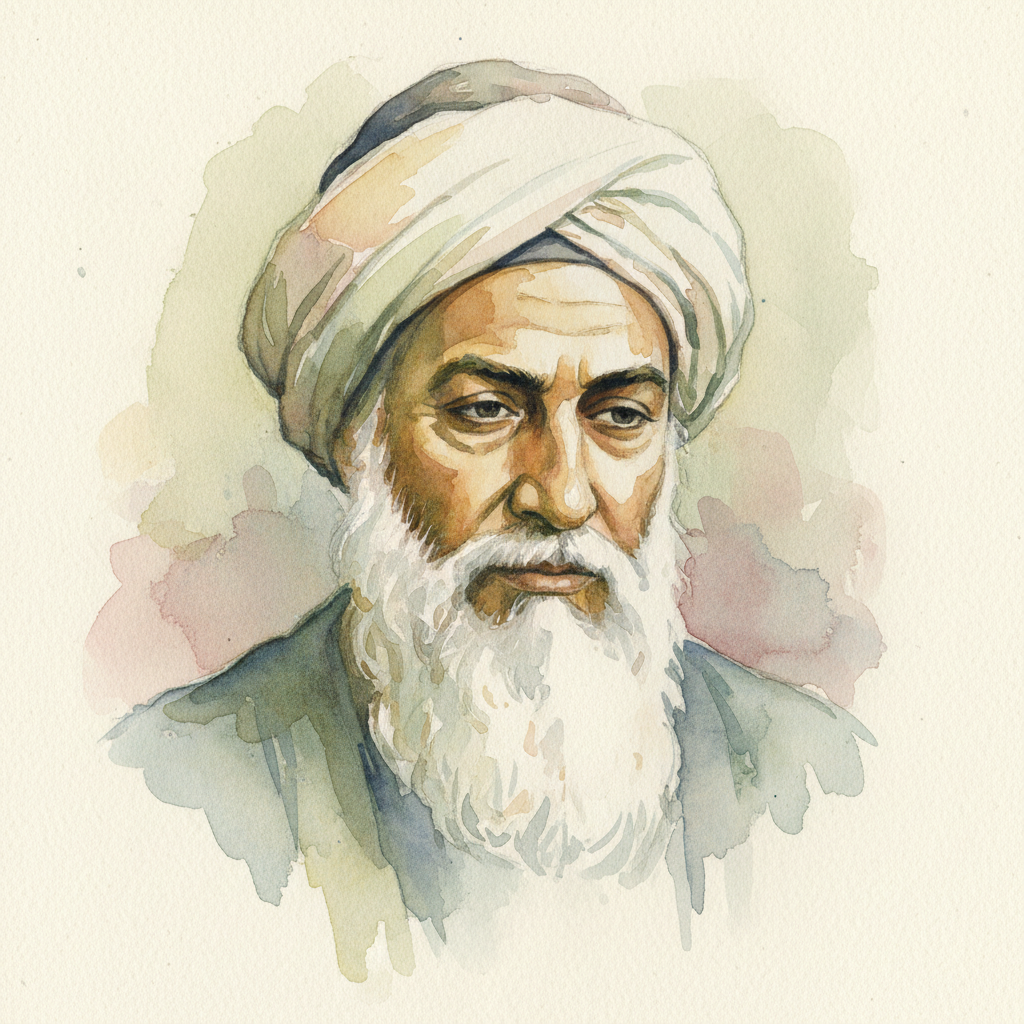
1207–1273 · Sufi
Rumi
“The wound is the place where the Light enters you.”
Jalāl ad-Dīn Muḥammad Rūmī, 1207–1273. Persian Sufi poet and mystic, born in what is now Tajikistan; his family fled the Mongol invasions and eventually settled in Konya, in what is now Turkey. He was already a respected scholar and jurist, leading a conventional religious life, when in 1244 a wandering dervish named Shams of Tabriz walked into his life and turned it upside down. Shams was rough, demanding, illuminated, and, after three years of intense companionship with Rumi, vanished — almost certainly murdered by Rumi's jealous students. Out of that grief Rumi became the poet we know. He began to whirl in a kind of ecstatic walking meditation, and dictated tens of thousands of verses about the longing of the reed for the reed-bed, the lover for the Friend, the soul for God. He founded the Mevlevi order — the "whirling dervishes" — whose *sema* (turning ceremony) is still performed today. He is one of the best-selling poets in the United States, four hundred years after his death, in a country where most readers cannot place his religion on a map. Core teaching: you were made for union with the Beloved. Everything in your life — including the loss, including the wound — is the Friend calling you home. The cure for the pain is in the pain. Key works: the *Masnavi* (six books, around 25,000 couplets, sometimes called "the Persian Qur'an"), the *Divan-e Shams-e Tabrizi* (his collected ghazals, in his teacher's name), *Fihi Ma Fihi* (table-talk).
Known for
- Love
- Longing
- Grief
- Union
Best for
- Heartbreak
- Loneliness
- Spiritual searching
- Joy
Their signature question
“What is the wound that is also the place where light enters you?”