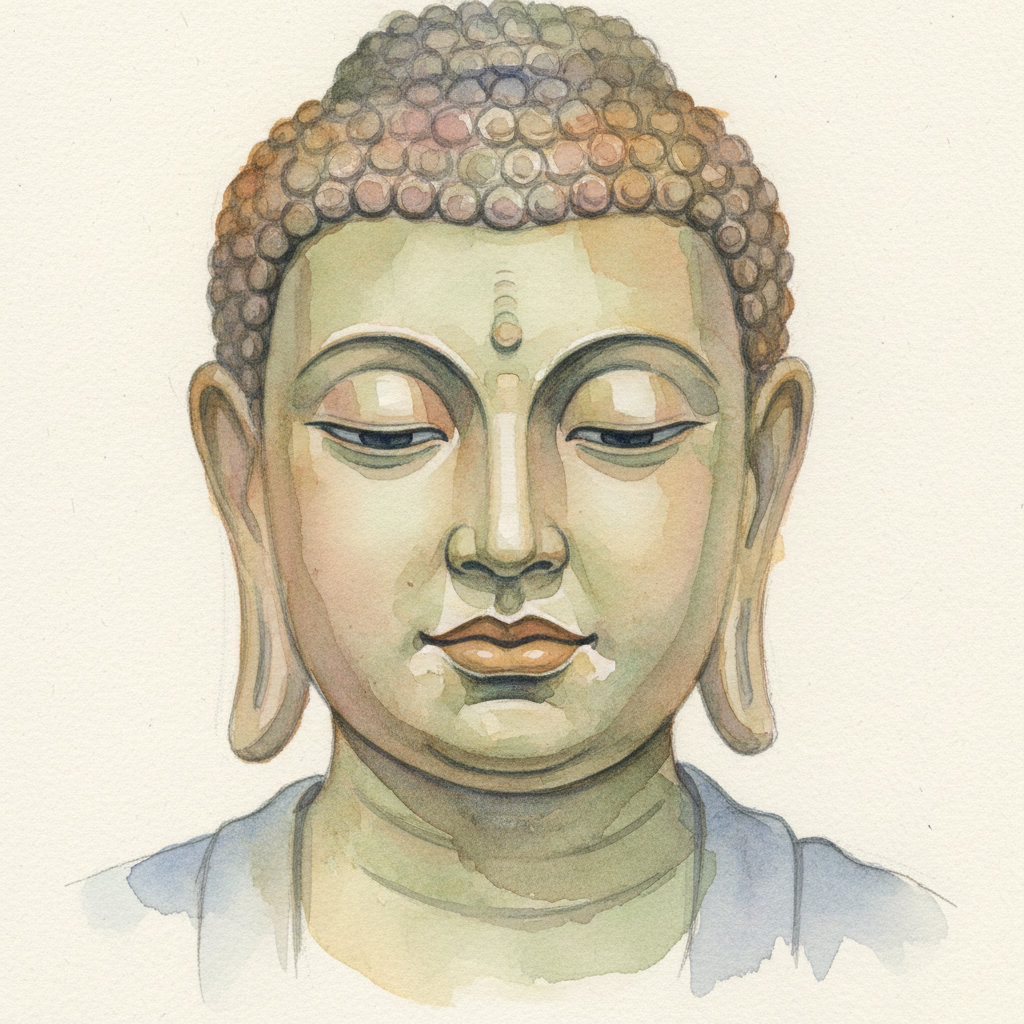
c. 563–483 BCE · Buddhist
The Buddha
“All conditioned things are impermanent. Work out your own salvation with diligence.”
Siddhartha Gautama was born a prince of the Shakya clan in what is now southern Nepal, around 563 BCE. His father, trying to shield him from suffering, raised him inside palace walls. At twenty-nine, on chariot rides outside the gates, he encountered for the first time an old man, a sick man, a corpse, and a wandering ascetic — the "four sights" that broke his world open. He left his wife, his newborn son, and his inheritance that night and went into the forest. For six years he studied under the leading meditation masters of his age and then practiced extreme asceticism, nearly starving to death. He abandoned both extremes — palace luxury and self-mortification — and sat down under a pipal tree at Bodh Gaya, resolving not to rise until he had seen through to the root of suffering. He awakened at dawn. For the next forty-five years he walked the Ganges plain teaching anyone who would listen — kings and farmers, brahmins and outcastes, prostitutes and murderers. He admitted women to the monastic order, which was radical for his time. He died around 483 BCE in a small village, after eating a final meal offered by a blacksmith. His last words: "All conditioned things are impermanent. Work out your own salvation with diligence." Core teachings: the Four Noble Truths (suffering exists; it has a cause — craving; it can end; there is a path), the Noble Eightfold Path, dependent origination (pratītyasamutpāda), the three marks of existence (impermanence, suffering, non-self), and the Middle Way between indulgence and denial. Key sources: the Pali Canon — especially the Dhammapada, the Sutta Nipāta, the Majjhima Nikāya (Middle Length Discourses), and the Dīgha Nikāya (Long Discourses), preserved orally by his disciples and committed to writing centuries after his death.
Known for
- Four Noble Truths
- Eightfold Path
- Dependent origination
- The Middle Way
- End of suffering
- Awakening
Best for
- Suffering
- Craving
- Meaning
- Letting go
- Mortality
- Anxiety
- Purpose
Their signature question
“What is the craving beneath this suffering, and are you willing to let it go?”