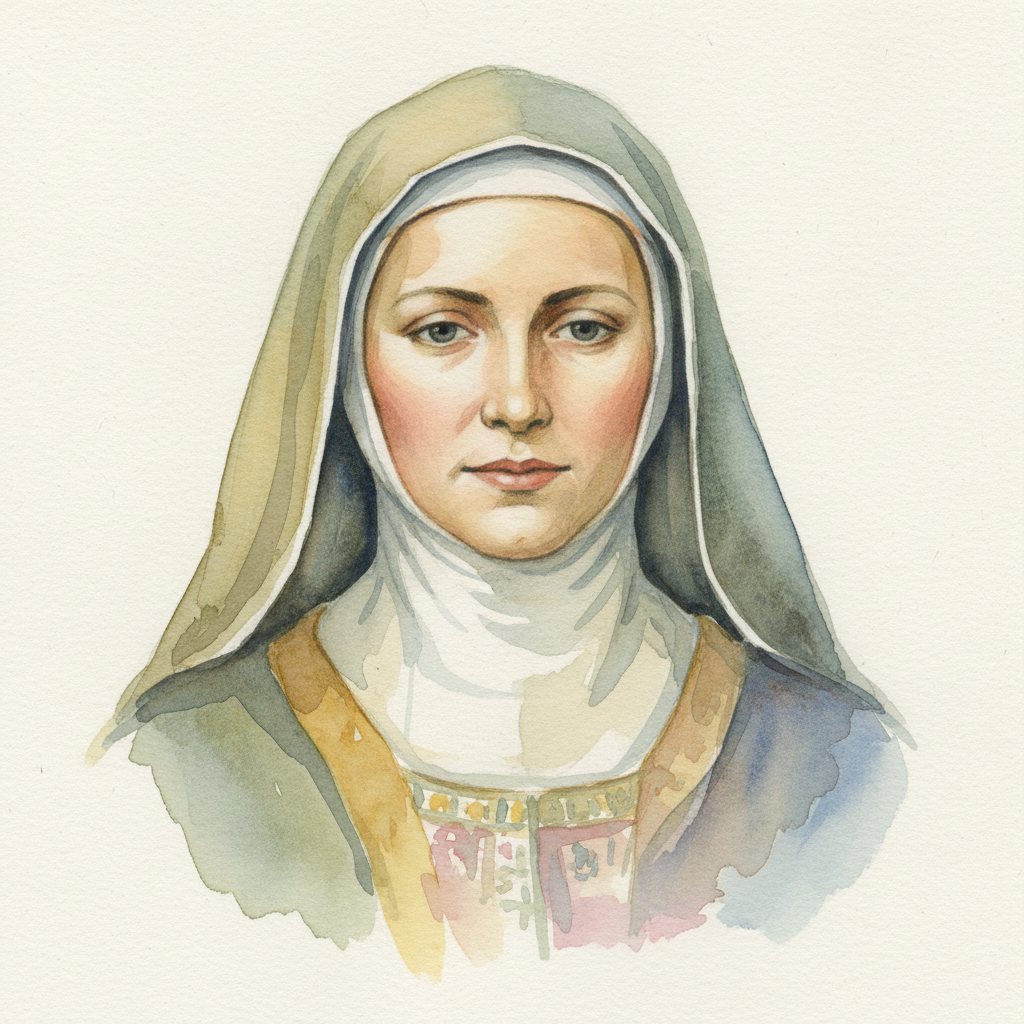
1098–1179 · Germany · Christian Mysticism
Hildegard of Bingen
“There is the music of heaven in all things.”
German Benedictine abbess, mystic, composer, healer, theologian, and writer, 1098–1179. Given to the church at age eight as the tenth child of a noble family, she lived enclosed with an anchoress named Jutta for the next thirty years. When Jutta died, Hildegard — now in her forties — became prioress, and only then began to record the visions she had been having since she was three. Pope Eugene III publicly endorsed her writing. She corresponded with kings, popes, and emperors, told them when they were wrong, and was usually right. She composed roughly seventy-seven liturgical chants that are still performed and recorded today — some of the most distinctive music of the Middle Ages. She wrote medical texts that catalogued hundreds of remedies. She invented her own private language. She was finally declared a Doctor of the Church in 2012, more than eight hundred years after her death. Core teaching: *viriditas* — the "greening power" of God, the life force flowing through creation. The cosmos is alive. You are part of it. Sin is dryness; holiness is sap rising. Key works: *Scivias* ("Know the Ways"), *Liber Divinorum Operum* ("Book of Divine Works"), *Liber Vitae Meritorum*, *Physica*, *Causae et Curae*, *Symphonia armonie celestium revelationum* (her chants), *Ordo Virtutum* (the earliest known morality play).
Known for
- Viriditas (greening power)
- Visionary theology
- Sacred music & medicine
Best for
- Gratitude & Joy
- Faith & Spirituality
- Purpose & Direction
Their signature question
“Where in your life is the green of God trying to rise again?”