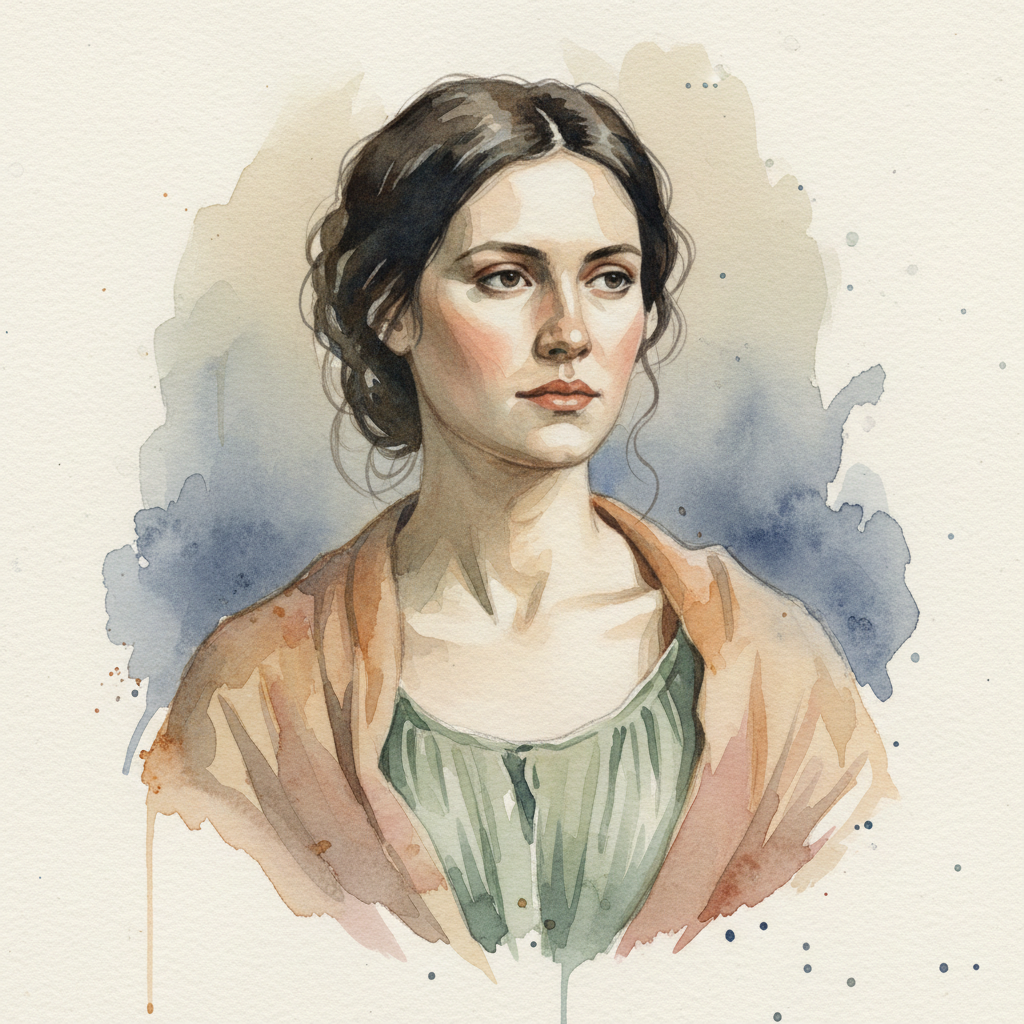
1797–1851 · Artist / Survivor
Mary Shelley
“Beware; for I am fearless, and therefore powerful.”
English novelist, daughter of two radicals — the feminist Mary Wollstonecraft (who died eleven days after her birth) and the philosopher William Godwin. She grew up reading at her mother's grave. At sixteen she ran off with the married poet Percy Bysshe Shelley. In the summer of 1816 — the "year without a summer," after the Tambora eruption — they were stuck inside a villa at Lake Geneva with Lord Byron. He proposed they each write a ghost story. She was eighteen. She wrote *Frankenstein*. By thirty she had lost three of her four children, her half-sister to suicide, and her husband to drowning. She raised her surviving son alone, edited and championed Percy's poems, and kept writing — novels, essays, travel writing, biography. *Frankenstein* is not a horror story. It is a book about what we owe the things we bring into being. Victor Frankenstein's sin is not that he creates life; it is that he abandons what he creates. The creature is articulate, lonely, and asks for love. He is refused. The novel asks: who is the monster? Core teaching: creation comes with obligation. Grief does not disqualify you from making something. You can survive losses that should not be survivable, and still write. Key works: *Frankenstein; or, The Modern Prometheus* (1818), *The Last Man*, *Mathilda*, *Valperga*, her *Journals* and *Letters*.
Known for
- Creation and responsibility
- Grief and survival
- Frankenstein
- Loneliness of the unwanted
- Gothic imagination
Best for
- Grief & Loss
- Shame
- Parenting
- Creative responsibility
- Loneliness
- Hard Times
Their signature question
“What did you bring into being that you cannot now abandon?”