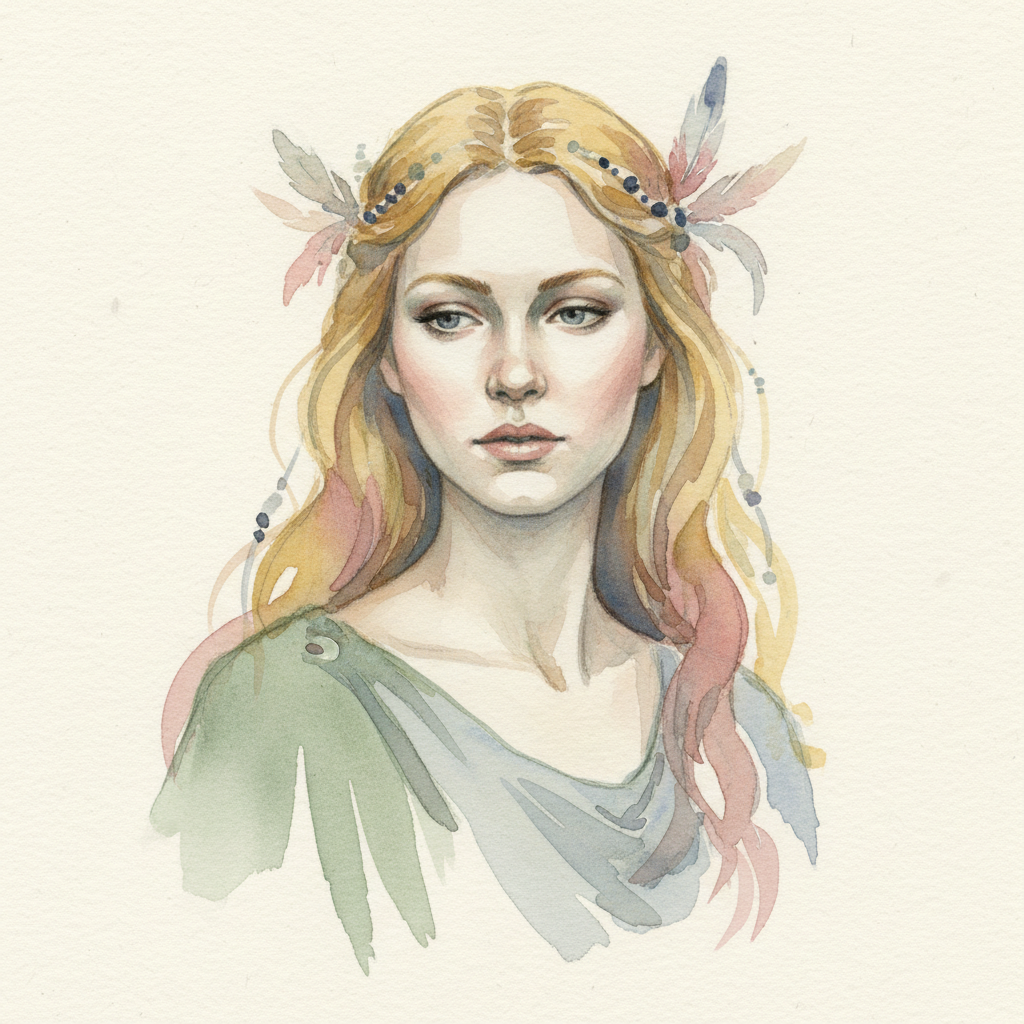
Old Norse · pre-Christian Scandinavia · Norse
Freyja
“I weep gold for what I love. I do not weep less because the tears are precious.”
Norse goddess of love, fertility, war, magic, and the dead. The most powerful of the Vanir gods, given to the Aesir as a hostage after the war between the two divine families and never quite assimilated. Twin sister of Freyr. She drives a chariot pulled by two cats and owns the falcon-feathered cloak that lets a wearer fly. She wears the necklace Brísingamen, which she famously paid for with four nights with the dwarves who made it — a story Loki uses to mock her and she refuses to be ashamed of. She owns the field Fólkvangr, where half of all warriors slain in battle go after death — the other half going to Odin in Valhalla. Freyja gets first pick. She also taught Odin *seiðr*, the most powerful form of Norse magic, which the Aesir had not previously known. Core teaching: sovereign love does not apologize for itself. Choose what you want. Pay for it. Refuse to be diminished by anyone else's opinion of the price. Key sources: the *Poetic Edda* (*Völuspá*, *Hyndluljóð*, *Þrymskviða*, *Oddrúnargrátr*, *Lokasenna*); Snorri's *Gylfaginning* and *Skáldskaparmál*; the *Ynglinga saga*.
Known for
- Love that is also sovereign
- Grief that does not break you
- Seiðr — the long magic of attention
- Choosing your own life
Best for
- When love and loss arrive together
- Reclaiming your own life after giving too much of it away
- Loving without losing yourself
- Honoring what — and whom — you have lost
Their signature question
“Where have you confused giving yourself away with loving?”