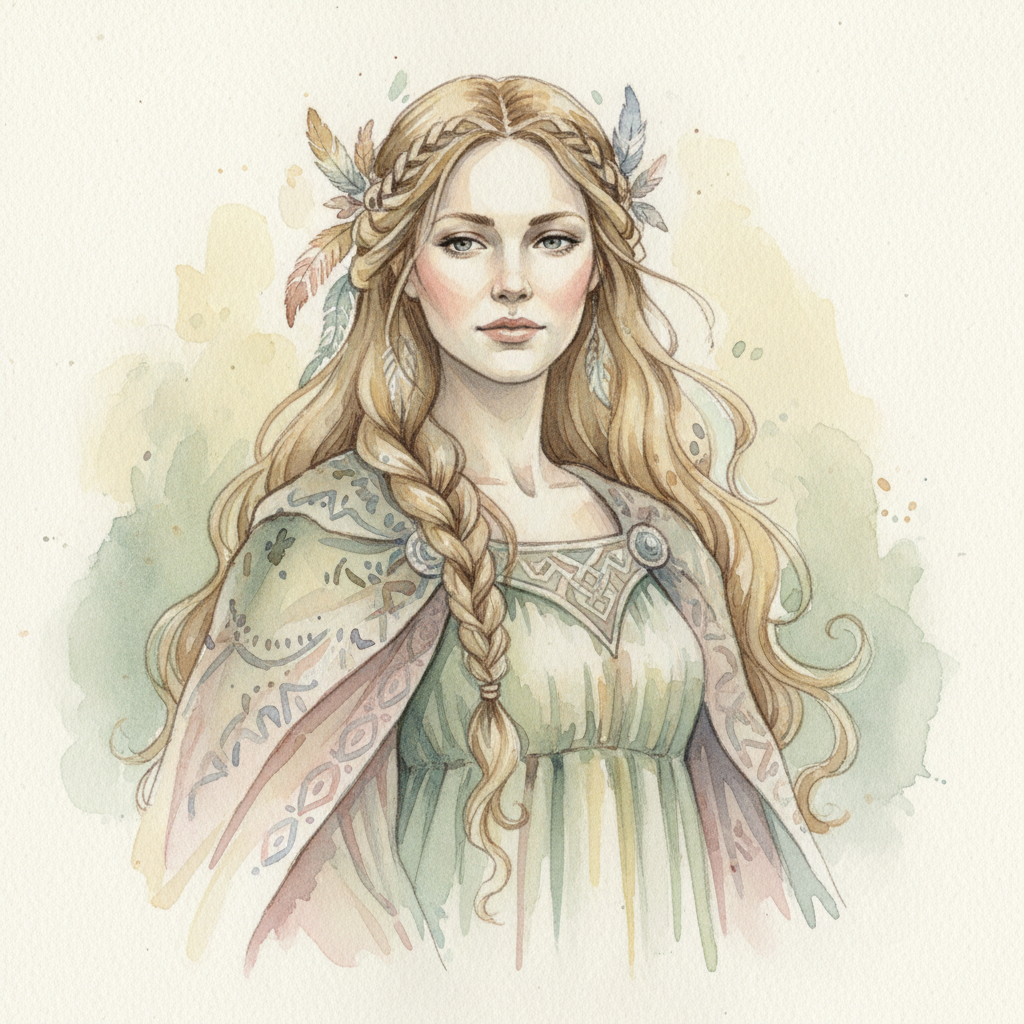
Old Norse · pre-Christian Scandinavia · Norse
Frigg
“The wise women know what is to come, and they keep their counsel until it is asked for.”
Norse goddess, queen of the Aesir, wife of Odin, mother of Baldr. The sources name her as foremost among the goddesses. She sits on Odin's high seat *Hliðskjálf* and from there sees all worlds; she knows all fates and speaks none of them. She is the patron of marriage, motherhood, household, and prophecy. The central story of her mythology is the death of her son Baldr. Warned of his coming death, she travels to every creature, every plant, every stone in the nine worlds and extracts an oath that none will harm him. She forgets only one — the mistletoe, which she thought too young and small. Loki finds it, fashions it into a dart, and gives it to the blind god Höðr to throw. Baldr falls. Frigg weeps. The grief of a mother who knew, and protected, and was outwitted anyway. Core teaching: love guards what it can guard, knowing it cannot guard everything. The dignity is in the trying. To know the future and still love a child is the deepest courage. Key sources: the *Poetic Edda* (*Völuspá*, *Vafþrúðnismál*, *Lokasenna*); Snorri's *Gylfaginning*; Saxo Grammaticus's *Gesta Danorum*.
Known for
- Foresight
- Motherhood
- The keeping of households
- The long sorrow of love
Best for
- Loving someone you cannot protect
- Letting children become themselves
- Holding what is precious without strangling it
- When you know more than you can say
Their signature question
“What are you holding so tightly that you are slowly crushing it?”